Mummification in ancient Egypt was a sacred and complex process intended to preserve the body for the afterlife. This ritual reflected not only the importance of death in Egyptian culture, but also the ancient Egyptians’ desire to achieve immortality.
The mummification process was practiced for thousands of years and became more sophisticated over time. The Egyptians believed that the body and soul were intrinsically connected, and mummification was essential to ensure their union in the afterlife.
What Was Mummification in Ancient Egypt?
Mummification was an embalming technique used by the Egyptians to preserve the bodies of their dead. This process was essential to ensure the continuation of existence in the afterlife. The Egyptians viewed the body as a vessel that housed the soul, and preserving it was crucial for eternal life.
Mummification was believed to allow the “ka” and “ba,” two aspects of the soul, to coexist with the body. The “ka” represented life force, while the “ba” symbolized personality. Preserving the body ensured that these two parts could reunite after death.
Although many cultures practiced mummification, the Egyptian technique stood out for its complexity and sophistication. The ancient Egyptians refined their method over the centuries, creating a funerary industry that lasted more than three thousand years.
What Was the Mummification Process in Egypt?
The mummification process in Ancient Egypt was meticulous and followed a series of clearly defined steps. First, the deceased’s body was taken to an embalming place, where it was inspected. The embalmer was a trained professional who used specific tools to carry out the ritual.
One of the first steps was to remove the internal organs, which were considered impure. These organs were placed in special jars called canopic jars, which were buried alongside the body. The body was then washed with water and dried using a salt called natron, which helped dehydrate it.
Once the body was completely dry, ointments and oils were applied to preserve the skin. Finally, the body was wrapped in bandages, often made from strips of linen, and amulets and personal belongings were placed between the layers to protect the deceased on their journey to the afterlife.
What Rituals Were Performed for the Dead in Egypt?
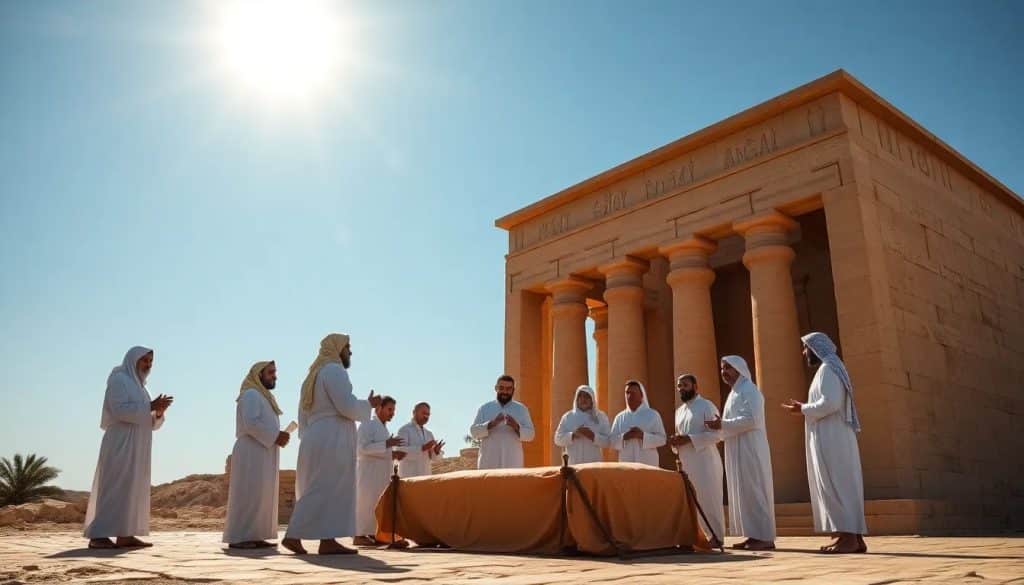
Funeral rituals in Egypt were varied and carried out with great solemnity. One of the most important was the embalming ritual, which included not only mummification but also religious ceremonies and prayers to guide the deceased on their journey to the afterlife.
Priests played a crucial role in these rituals. They made offerings and recited prayers before the mummy, asking the gods to allow the deceased to enter the world of the dead. During these ceremonies, it was believed that the deceased’s soul could hear and benefit from the prayers.
In addition to mummification, other rituals were performed, such as the weighing of the heart. In this ritual, the deceased’s heart was weighed against the feather of Maat, goddess of truth and justice. If the heart was lighter, the soul was considered worthy of entering the afterlife.
What Are the 7 Steps of Mummification?
Mummification followed a series of clearly defined steps, often summarized in seven stages. Each step had a specific purpose in preserving the body and preparing it for eternal life. The steps were as follows:
- Removal of the internal organs.
- Cleaning the body with water and oils.
- Dehydration with natron.
- Applying ointments and oils.
- Wrapping the body in strips of linen.
- Placement of amulets and personal items.
- Burial in a sarcophagus or tomb.
Each of these steps was carried out with great attention to detail, and embalmers were regarded as practitioners of a sacred art. The Egyptians believed that a proper process ensured not only the preservation of the body but also a successful transition to the afterlife.
What rituals were involved in mummifying a pharaoh?
Mummifying a pharaoh was an even more elaborate process than mummifying an ordinary citizen. The rituals were grand and full of symbolism, reflecting the pharaoh’s importance as a leader and living god. Specific ceremonies were performed to honour his status and ensure his ascent to eternal life.
One of the most significant rituals was the “Apophis” ceremony, in which the gods were invoked to protect the pharaoh on his journey. Riches, food and other valuable objects that would be useful to him in the afterlife were also offered.
The pharaoh’s embalming involved advanced techniques and higher-quality materials. For example, aromatic resins and finer ointments were used to ensure optimal preservation of the body. The pharaoh’s sarcophagus, often ornate and decorated, was also a crucial part of his funeral ritual.
Animal Mummification in Ancient Egypt
Animal mummification was common in ancient Egypt, where many animals were considered sacred and associated with different gods. For example, cats were dedicated to the goddess Bastet, and mummifying them was seen as an act of devotion.
Animals were embalmed using techniques similar to those used for humans. Their organs were removed, and their bodies were treated with natron and oils. Mummified animals were often buried alongside their owners or in dedicated sanctuaries, where prayers and offerings were made.
Mummification was also practised on animals such as ibises, crocodiles and bulls, which held great religious and cultural significance. These practices reflect the close connection between the Egyptians and the animal world, as well as their belief in life after death.
Egyptian Funeral Rituals and Funerary Papyri
Funeral rituals in Egypt were deeply intertwined with religion and culture. Funerary papyri, such as the Hawara Papyrus, are an invaluable source of information about the mummification process and the associated rites. These documents described not only embalming techniques but also the spiritual beliefs and rituals that accompanied death.
The papyri also contained instructions on maintaining tombs and the property of the deceased, indicating the importance of the funerary industry. The texts often included prayers and spells intended to protect the deceased on their journey to the afterlife.
The wealth of information in these papyri has enabled archaeologists and Egyptologists to better understand the complexity of mummification and funeral rituals in Egypt. This knowledge helps us appreciate the importance of eternal life in Egyptian culture and how it was reflected in funerary practices.
Frequently Asked Questions About Mummification Rituals in Egypt
What was the mummification process in Egypt?
Mummification in Egypt was a sacred ritual involving the removal of organs, dehydration of the body, and the use of oils and ointments. This process preserved the body for life in the afterlife, where the soul was believed to continue to exist.
What are the 7 steps of mummification?
The seven steps of mummification included removing the organs, cleansing and dehydrating the body, applying ointments and wrapping the body. Each step was essential to ensure that the deceased could enjoy eternal life.
What were the funeral rituals like in Egypt?
Funeral rituals in Egypt included embalming ceremonies, prayers by priests and offerings to guide the deceased to the afterlife. These rituals showed the deep spiritual connection the Egyptians had with death.
What rituals were involved in mummifying a pharaoh?
Mummifying a pharaoh required elaborate rituals that reflected his divine status. These included specific ceremonies invoking the gods and the use of higher-quality materials to ensure his protection in the afterlife.