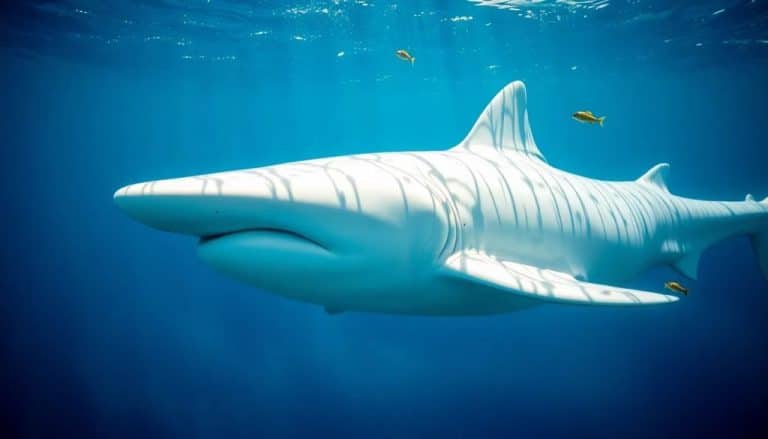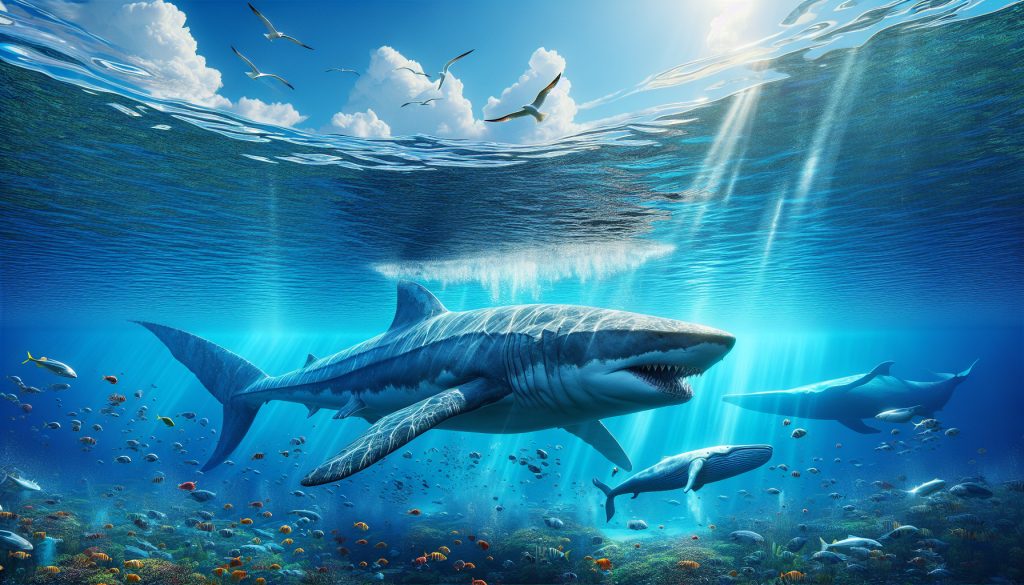
The megalodon, one of the largest sharks ever to exist, left an indelible mark on ocean history. This giant shark could grow to an impressive length, making it a superpredator feared by many marine species. In this article, we’ll explore its characteristics, feeding habits, and the reasons behind its extinction.
From its size to its competitors, the megalodon is an object of fascination and study. Join us on this journey to learn more about how this giant shark hunted and devoured prey as large as whales.
What Was the Megalodon and How Big Was It?
The megalodon was a shark that lived between 23 and 3.6 million years ago. It is estimated to have measured between 15 and 20 meters long, making it one of the largest prehistoric sharks ever to exist. Its size made it a formidable ocean predator.
Researchers have used fossil remains, especially teeth, to estimate its size and mass. Megalodon teeth could reach up to 18 centimeters long, indicating that the animal had an extremely powerful jaw.
In addition to its size, the megalodon had a habitat that spanned most of the world’s oceans, from warm waters to more temperate regions. This gave it almost total dominance over its environment.
What Were the Megalodon’s Characteristics?
The megalodon’s characteristics set it apart from other sharks. Its body was robust and streamlined, adapted for fast swimming and hunting. It had serrated teeth, perfect for tearing flesh.
The megalodon was also notable for its skeletal structure, which was made mainly of cartilage. Although this made it lighter, this characteristic limited the number of fossils found to date.
- Large size: It could grow to more than 20 meters long.
- Bite force: It is estimated to have had one of the most powerful bites of all time.
- Varied habitat: It lived in warm and temperate oceans.
What Did the Megalodon Eat?
As an apex predator of the oceans, the megalodon had a diet based on large prey. It is known to have hunted marine mammals such as orcas and whales, using its great size and speed to ambush its victims.
Its hunting technique was effective; it could devour an entire whale in just a few bites. Its ability to detect vibrations in the water also helped it locate prey effectively.
The megalodon is believed to have been a giant shark that ate orcas and other marine species, thanks to its great size and strength. This hunting behavior made it one of the most fearsome predators of its time.
Why Did the Megalodon Become Extinct?
The megalodon's extinction is a subject of debate among scientists. Changes in climate and sea levels, along with competition for resources, are thought to have been key factors in its disappearance.
The megalodon needed large amounts of food, and the decline in large prey such as whales may have affected its ability to survive. The evolution of new marine predators may also have played a role in its extinction.
Another possible factor in its disappearance was the adaptation of competing species, such as orcas, which may have developed more efficient hunting strategies.
What Prey Could the Megalodon Eat?
The megalodon had a varied menu that included a wide range of prey. Its diet focused on marine mammals, but it also hunted large fish. Some examples of its prey include:
- Large whales.
- Orcas.
- Other sharks.
Its jaw and teeth were designed to tear flesh quickly, making it easier to hunt large prey. This ability made it a dominant predator in its ecosystem.
Who Were the Megalodon's Main Competitors?
Despite being a formidable predator, the megalodon was not alone in its habitat. Other marine animals competed for resources, including smaller sharks and mammals such as orcas. These competitors began to adapt and hunt more efficiently.
Orcas, in particular, have become a subject of interest. They have been shown to hunt in groups, giving them an advantage when facing large prey, even sharks such as the megalodon.
Other sharks that coexisted in the same ecosystem also competed for food, creating an environment of constant struggle for survival.
Related Questions About Giant Sharks
Could a Megalodon Swallow a Whale?
The megalodon's ability to devour large prey is undeniable. It is estimated that, thanks to its size and strength, a megalodon could swallow an entire whale in a matter of minutes. Its jaw, designed to tear flesh, allowed it to consume large amounts of food quickly.
Studies suggest that this giant shark could indeed hunt and feed on adult whales, demonstrating its role as an apex predator in the ocean.
Who Would Win, a Whale or a Megalodon?
In a direct encounter, the outcome would depend on several factors. An adult whale is very large and can be difficult to hunt because of its size. However, the megalodon had the advantage in terms of speed and hunting effectiveness. In most cases, the megalodon would be the clear winner because of its physical build and hunting abilities.
However, some whale species, such as the humpback whale, can defend themselves against predators. This creates an interesting scenario in which survival may depend on the specific circumstances.
Could a Megalodon Eat an Orca?
Given the size of a megalodon, it is plausible that it could hunt and eat orcas. Megalodons could attack several types of marine mammals, and orcas, although intelligent predators, would be potential prey.
Orcas are highly intelligent, social animals that often hunt in groups. This could be a decisive factor in their survival against a megalodon, as their ability to work together gives them a significant advantage.
What Whale Could Defeat a Megalodon?
In terms of size, blue whales are the only ones that could compete with the megalodon. However, it is important to note that encounters between these species are purely hypothetical, since the megalodon became extinct millions of years ago.
In theory, a blue whale, the largest animal on the planet, might have the size and strength needed to survive an encounter. However, the megalodon had the advantage in hunting and speed, which could make the outcome uncertain.