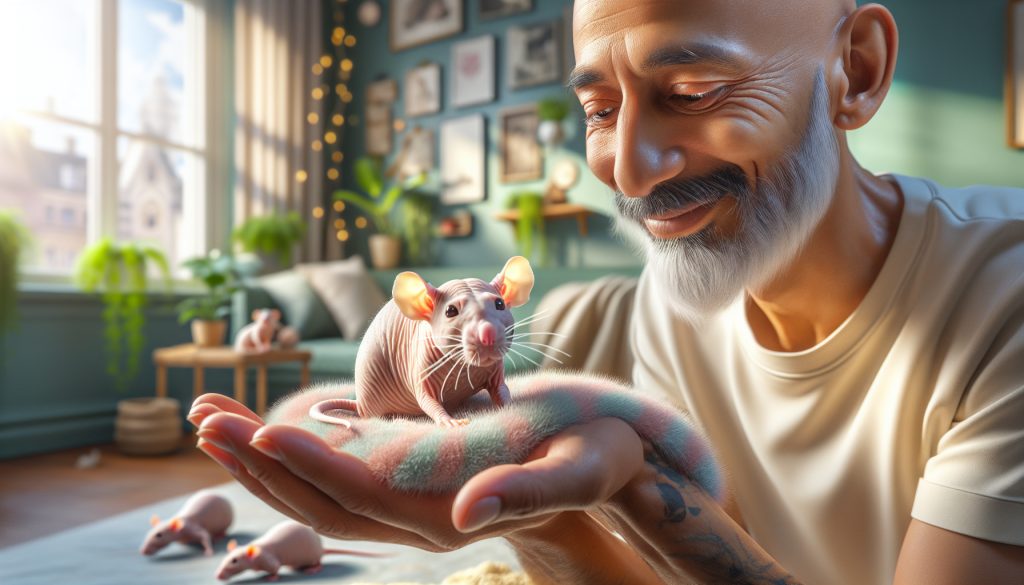
Hairless rats, also known as bald rats or Egyptian rats, are unique pets that require special care because they have no fur. This characteristic makes them more vulnerable to various environmental factors, so it is crucial to understand their needs to protect their health and well-being.
Caring for a hairless rat means paying attention to its diet, hygiene, and socialization. Below, we’ll take a closer look at the essential things to consider when keeping one of these fascinating pets.
What Does a Hairless Rat Need to Live at Home?
To ensure a comfortable and healthy life, it is essential to understand the specific requirements of a hairless rat. First, provide a spacious, safe area where it can move around freely. This includes a suitable cage with plenty of space and places to hide.
It is also important to make sure the cage has absorbent bedding that will not irritate its skin. Materials such as paper bedding or hay are ideal. The temperature in its surroundings should also be controlled, as hairless rats are more sensitive to cold and extreme heat.
Finally, the cage should be cleaned regularly to maintain a healthy environment and reduce the risk of infections. It is also a good idea to include toys and accessories to encourage natural behaviour and keep them active.
How Should You Feed a Hairless Rat?
Diet is one of the most important aspects of caring for a hairless rat. Its diet should be balanced and nutrient-rich. Laboratory blocks should make up the foundation of its diet, providing 80% of the nutrients it needs. These blocks are formulated specifically to meet the requirements of a healthy diet.
Small amounts of fresh fruit and vegetables can also be included in its diet. Recommended options include:
- Apples
- Carrots
- Broccoli
- Spinach
It is essential to avoid foods that are toxic to them, such as chocolate and citrus fruits. You should also limit the number of treats you give them, as too many can harm their health.
Fresh water should also always be available. Change the water daily to make sure it stays clean and free of contaminants.
Why Is Hygiene Important for Hairless Rats?
Hygiene is crucial when it comes to caring for a hairless rat properly. Because they have no fur, these rats are more susceptible to skin irritation and disease. It is therefore essential to keep their habitat clean and tidy.
Deep-clean the cage at least once a week. Remove any waste and replace the old bedding. It is also a good idea to disinfect accessories and toys to prevent bacteria from building up.
Also, regularly check your rat's skin and body for any signs of irritation or infection. If you notice anything unusual, consult a veterinarian who specialises in exotic pets.
How Can You Keep a Hairless Rat Company?
Rats are social animals that thrive in the company of others. That's why it's essential to make sure your hairless rat gets enough social interaction. Ideally, consider adopting at least two rats, preferably of the same sex, so they can socialise with each other.
Hairless rats enjoy playing and exploring, so it's important to spend time interacting with them every day. You can take them out of their cage and let them play in a safe space. This not only supports their social development but also promotes their emotional well-being.
Remember that hairless rats can be a little more delicate, so avoid activities that could cause them stress or injury.
What Diseases Are Common in Hairless Rats?
Hairless rats are prone to certain illnesses because of their vulnerability. Some of the most common conditions include:
- Skin problems: Their exposed skin is more susceptible to irritation and infection.
- Respiratory infections: Like other rats, they can develop respiratory problems if their environment is not well ventilated.
- Obesity: As very active animals, they can become obese if fed an unsuitable diet, which can in turn lead to other health problems.
It is vital to take your pet for regular check-ups with a veterinarian experienced in rat care. Early detection and appropriate treatment are key to maintaining your rat's health.
How to Choose the Ideal Cage for a Hairless Rat
Choosing the right cage is essential for your hairless rat's well-being. It should be spacious enough to allow them to move around and stay active. Multi-level cages are an excellent option, as they provide more room to explore.
Some features to consider include:
- Material: Make sure the cage is made from safe, non-toxic materials.
- Size: It should be large enough for your rat to move around comfortably.
- Ventilation: The cage should have good airflow to prevent respiratory problems.
Also, check that the cage bars are not too far apart, as your rat could try to escape or injure itself. Provide a comfortable, safe place to rest, such as a little house or a hammock.
Related Questions About Caring for a Hairless Rat
What Do Hairless Rats Eat?
Hairless rats have a diet similar to that of other rats. Their main food should be laboratory blocks, which provide balanced nutrition. You can also introduce small portions of fresh fruit and vegetables, such as bananas and carrots. It is essential to avoid toxic foods and limit treats to prevent health problems.
What Does a Rat Need to Live at Home?
To live at home, a hairless rat needs a spacious cage, suitable bedding and a temperature-controlled environment. It also needs a balanced diet, fresh water and the opportunity to socialise with other rats or its owners. Regularly cleaning its habitat is essential for its health.
What Is a Hairless Rat Called?
Hairless rats are commonly known as "bald rats" or "Egyptian rats." They are popular among pet lovers for their sociable, curious nature and distinctive appearance.
How Do You Give a Rat Water?
It is important to provide your hairless rat with fresh, clean water at all times. You can use a ball-tip water bottle, which is easy to use and helps prevent the water from becoming contaminated. Be sure to change the water daily and clean the bottle regularly to maintain a healthy environment.