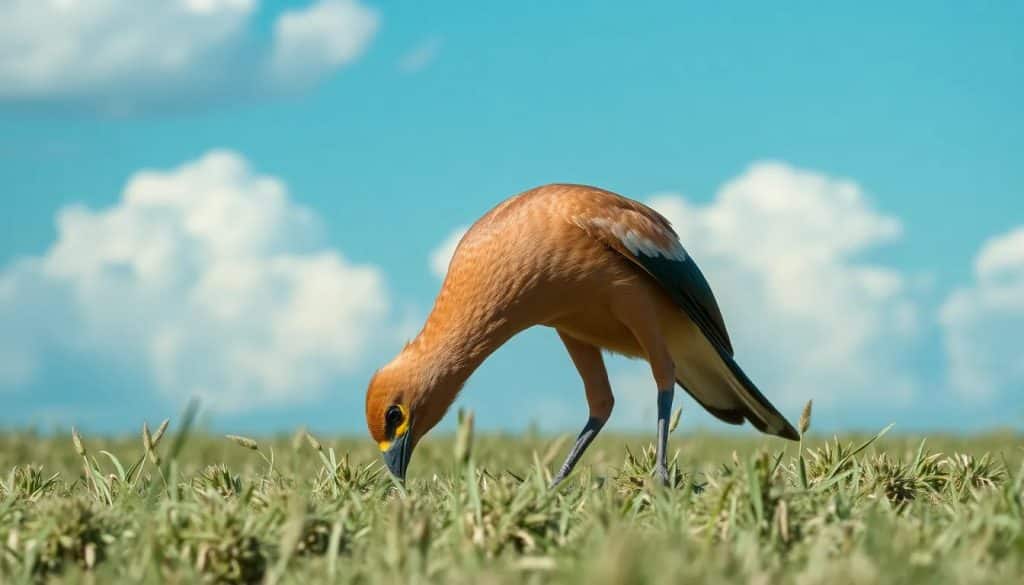
The ostrich is a fascinating bird, known for its size and unusual characteristics. One of the most widespread myths about this bird is the belief that it buries its head in the sand when it feels threatened. But is it true that ostriches bury their heads in the sand? In this article, we’ll explore the truth behind this myth and ostrich behavior.
The idea that ostriches bury their heads is based on historical misunderstandings and mistaken observations. In this article, we’ll debunk not only this belief but also other aspects of these birds’ behavior, revealing the truth about their lives and habits.
Why do ostriches put their heads in the sand?
The belief that ostriches put their heads in the sand is actually an unfounded myth. This behavior has been misunderstood throughout history. When an ostrich crouches down, it may look as though it is hiding its head, but in reality, it is trying to camouflage itself in its surroundings.
Ostriches often dig in the ground to incubate their eggs and find food. This behavior is essential to the survival of their chicks and the adults themselves. Also, crouching can make them less visible to lurking predators.
So the image of an ostrich with its head in the sand is more a misperception than a real behavior. Rather than hiding, they are actually trying to protect themselves and make sure their eggs are well cared for.
What do ostriches do when they’re afraid?
When an ostrich faces danger, its response is quite different from simply hiding its head. Instead, it tends to adopt a cautious posture and become highly alert. It may crouch and flatten itself against the ground to become less visible to predators.
Ostriches can also run at high speeds, reaching up to 70 km/h, which allows them to escape threats quickly. This behavior shows that, despite the myths surrounding them, they are brave and fast birds.
In general, they prefer to flee from danger rather than confront it. This survival strategy helps them avoid direct conflict with predators, an effective tactic for their conservation.
Where did the myth that ostriches bury their heads come from?
The myth that ostriches bury their heads has its roots in the ancient observations of Pliny the Elder, a Roman naturalist. Pliny mistakenly believed that ostriches disappeared when they crouched, leading to the creation of this idea. Over the years, this interpretation has been misunderstood and has persisted in popular culture.
This misconception has been reinforced by depictions of ostriches in art and literature, where they are often portrayed as cowardly birds. However, this does not reflect their true behavior, which is much more complex.
- Ostriches are cautious and adaptable birds.
- They don’t bury their heads because they’re cowards, but to camouflage themselves.
- Their crouching behavior is more closely related to incubation and feeding.
Is it true that ostriches play dead?
The idea that ostriches play dead as a defense mechanism is also a myth. Unlike some species that can feign death, ostriches do not use this behavior as a defense. When they feel threatened, they prefer to run away or hide.
However, they may remain still and crouch on the ground, which can sometimes give the impression that they are playing dead. This is another way these birds try to go unnoticed by a predator.
In fact, ostriches are highly intelligent and adaptable animals, which allows them to find various ways to avoid danger without resorting to dramatic strategies such as playing dead.
Do rheas bury their heads?
The rhea, a bird similar to the ostrich, has also been the subject of similar myths. However, like ostriches, rheas do not bury their heads in the ground. This behavior is more a reflection of their adaptation to their environment.
Rheas use various strategies to protect themselves from predators. They often stand upright, watching their surroundings closely and ready to flee if they sense danger. Therefore, the myth that they bury their heads is equally false.
It is interesting to note that both ostriches and rheas behave similarly when faced with danger, reflecting their evolutionary adaptations to predators in their respective habitats.
What animal buries its head in the ground?
Unlike ostriches, some other animals really do burrow or spend time with their heads in the ground. For example, certain species of rodents, such as rats and moles, can be seen putting their heads into the ground to build shelters or look for food.
In addition, some animals, such as turtles, may bury their heads in the sand for protection. However, these behaviors are very different from those of ostriches, which use their heads to dig and incubate their eggs.
It is important not to confuse the behavior of different species, since each has its own adaptations and survival strategies in the environments where they live.
Why is the idea that ostriches are cowardly a myth?
The perception that ostriches are cowardly is based on the mistaken idea that they bury their heads when faced with danger. In fact, ostriches are very intelligent birds, and their adaptive behavior helps them survive in their environment.
Their strategy of fleeing, combined with their speed, makes them less likely to take unnecessary risks. As ground-dwelling birds, their ability to run quickly is one of their best defenses.
Ostriches are also known for protecting their young. When they sense that their eggs or chicks are in danger, they become extremely aggressive and may confront predators, disproving the idea that they are cowardly birds.
Related questions about ostrich behavior
Why do ostriches put their heads in the ground?
Ostriches put their heads in the ground mainly to incubate their eggs and feed. This behavior is a form of camouflage in dangerous situations and does not indicate fear. By digging and crouching, an ostrich seeks to protect its eggs and itself.
What do ostriches do when they are afraid?
When an ostrich feels afraid, it usually becomes very alert and may choose to flee. It may also crouch to make itself less visible to predators. This defensive behavior allows it to escape quickly.
What do ostriches do when they are startled?
When startled, ostriches prioritize their safety. Rather than confront danger, they prefer to flee. They may also adopt a low profile to avoid being seen, demonstrating their ability to adapt to threatening situations.
Do rheas bury their heads?
No, rheas do not bury their heads in the ground. Like ostriches, they have adaptive behaviors that help them survive in their environment. Rheas are very alert birds that prefer to escape danger rather than hide.
For more information about ostrich behavior and habitat, here is a video you may find interesting: