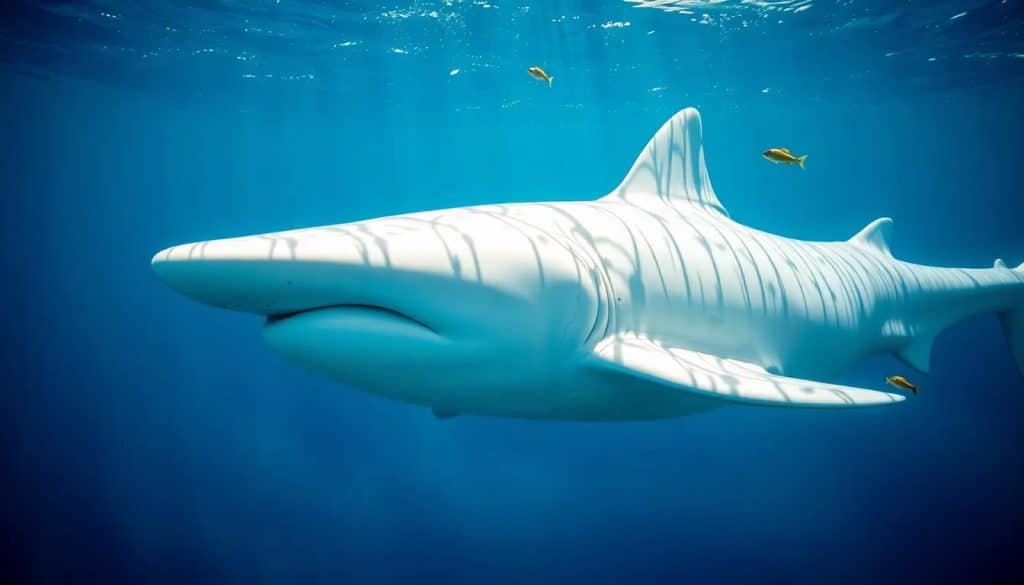
The great white shark, scientifically known as Carcharodon carcharias, has been an object of fear and fascination throughout history. Its image has been tarnished by popular culture and Hollywood films, especially the iconic movie Jaws. But is the great white shark’s bad reputation justified? This article explores the truth behind its reputation and the myths surrounding it.
Why do great white sharks have a bad reputation?
Sharks’ bad reputation in popular culture has been fueled by exaggerated stories and unfounded fears. Horror films such as Jaws have contributed significantly to this distorted perception. In these stories, the shark is portrayed as a bloodthirsty monster, creating a terrifying image in the public’s mind.
However, it is important to clarify that the great white shark is a key marine predator in the ecosystem. Its role is crucial to maintaining balance in the populations of other marine species. This means that although great white sharks can be dangerous in certain circumstances, they do not behave like mindless killers.
Shark attacks are extremely rare. According to statistics, the odds of being attacked by a shark are approximately 1 in 3,7 million. This puts the excessive fear often attributed to them into perspective.
Do sharks have a bad reputation?
Sharks’ bad reputation is largely due to a lack of understanding about these animals. Many people think they are aggressive creatures that attack humans for pleasure, but this is not true. Sharks often bite humans out of curiosity or to determine whether they are prey.
In addition, the great white shark’s image has been distorted by media coverage, which tends to dramatize incidents involving shark attacks. These sensationalist portrayals contribute to a negative perception, creating an image of these fish that does not reflect reality.
It is crucial to highlight that sharks are vital to the health of the marine ecosystem, and their conservation is essential. Overfishing their populations is putting their survival at risk.
How dangerous is the great white shark?
The great white shark is considered one of the most powerful marine predators. However, its danger has been exaggerated. In reality, great white sharks are responsible for a very limited number of attacks on humans. Most encounters result in unintentional bites, often because the shark mistakes a person for its usual prey, such as seals.
Marine biologists and shark experts agree that the great white shark does not seek out humans as prey. Most attacks occur in waters where people engage in water sports, increasing the chances of an encounter. However, this does not mean that great white sharks are naturally aggressive creatures.
- Attacks are extremely rare.
- Most encounters are not fatal.
- Sharks do not hunt humans.
With this in mind, it is important to understand that fear of this animal should be replaced with greater awareness and education about its behaviour. This not only helps dispel myths about its reputation, but also promotes shark conservation and the protection of its natural habitat.
What should you do if you see a great white shark?
If you are in the water and see a great white shark, it is crucial to stay calm. Although the situation can be frightening, experts advise against panicking. Sudden movements may attract the shark, so it is best to try to move slowly backwards towards the shore.
It is also vital to avoid making noise or splashing, as this could attract the shark’s attention. If possible, keep your eyes on the shark as you move backwards. Maintaining eye contact may deter the shark from coming closer.
If a shark approaches, try to stay upright and make yourself look like a human, not prey. This may help the shark lose interest in you as a target. Remember that most encounters with sharks do not end in an attack.
The Truth Behind the Great White Shark’s Reputation
The image of the great white shark as a ruthless killer is largely a myth. The truth is that these animals are remarkable and have unique features that make them fascinating. For example, their multiple rows of teeth allow them to hunt efficiently, while their ampullae of Lorenzini enable them to detect electrical fields in the water, helping them locate prey.
The great white shark can also regulate its body temperature, allowing it to hunt in cold waters. Its size and physiological adaptations make it one of the ocean’s most efficient predators.
Unfortunately, sharks’ bad reputation has contributed to overfishing: catching them for their fins and meat has drastically reduced their populations. This is a wake-up call to change our perception of sharks and work to conserve them, ensuring they retain their place in the ecosystem.
The Great White Shark’s Unique Adaptations
The great white shark has a range of adaptations that make it an effective predator. Its sharp, serrated teeth are ideal for tearing the flesh of its prey. Its keen sense of smell also allows it to detect blood in the water from great distances.
One of its most impressive adaptations is its ability to detect electrical fields using its ampullae of Lorenzini, which allow it to locate prey even in murky water. This gives it a competitive advantage over other marine predators.
- Sharp, serrated teeth.
- Exceptional sense of smell.
- Ability to detect electrical fields.
These features, along with its great size and speed, make the great white shark a superpredator in the ocean, playing an essential role in maintaining the balance of the marine ecosystem.
Conservation Threats Facing Sharks
Despite being an incredibly well-adapted species, great white sharks face multiple threats. Sustainable fishing is one of the biggest concerns, as overfishing has caused their populations to decline. Many sharks are accidentally caught in fishing nets or as part of commercial fishing operations.
Ocean pollution is also a serious problem for sharks. Plastic waste and chemical pollutants damage the health of the ecosystems where they live, disrupting the food chain and affecting sharks and their prey.
Finally, climate change is raising ocean temperatures, altering shark habitats and migration patterns. Conserving these animals is essential not only for their survival but also for the health of our oceans.
The Great White Shark’s Role in the Marine Ecosystem
The great white shark plays a vital role in the marine ecosystem. It regulates the populations of other species, helping maintain balance in the marine environment. Without them, populations of seals and other marine mammals could grow unchecked, destabilising the ecosystem.
Their presence in the ocean is also an indicator of the health of the marine environment. The disappearance of sharks can point to wider problems in the ecosystem, such as overfishing and pollution.
Therefore, the importance of shark conservation cannot be overstated. Protecting these animals means protecting the balance of marine life and the health of our oceans.
Questions About the Great White Shark’s Reputation and the Reality
Why do great white sharks have a bad reputation?
Great white sharks’ negative reputation stems from the influence of popular culture and a lack of understanding about their behaviour. Exaggerated stories and horror films have fuelled an unjustified fear of these animals, portraying them as bloodthirsty creatures. However, attacks on humans are rare and generally happen because of mistaken identity, not aggression.
Do sharks have a bad reputation?
Yes, sharks have a bad reputation that stems mainly from myths and misinformation. Public perception often overlooks their crucial role in the marine ecosystem and the benefits they bring to ocean health. By learning about their behaviour and ecology, we can begin to change this negative perception.
How dangerous is the great white shark?
The great white shark is a formidable predator, but it is not inherently dangerous to humans. Attacks are rare and often happen by accident. Most interactions with sharks do not result in attacks, and when they do, it is usually because of mistaken identity. Staying calm and knowing how to react can help reduce any risk.
What should you do if you see a great white shark?
If you encounter a great white shark, stay calm and follow a few basic guidelines. Slowly and carefully move back towards shore, avoiding sudden movements. Maintain eye contact with the shark, as this may deter it. Remember that most encounters do not end in an attack and that sharks do not seek out humans as prey.