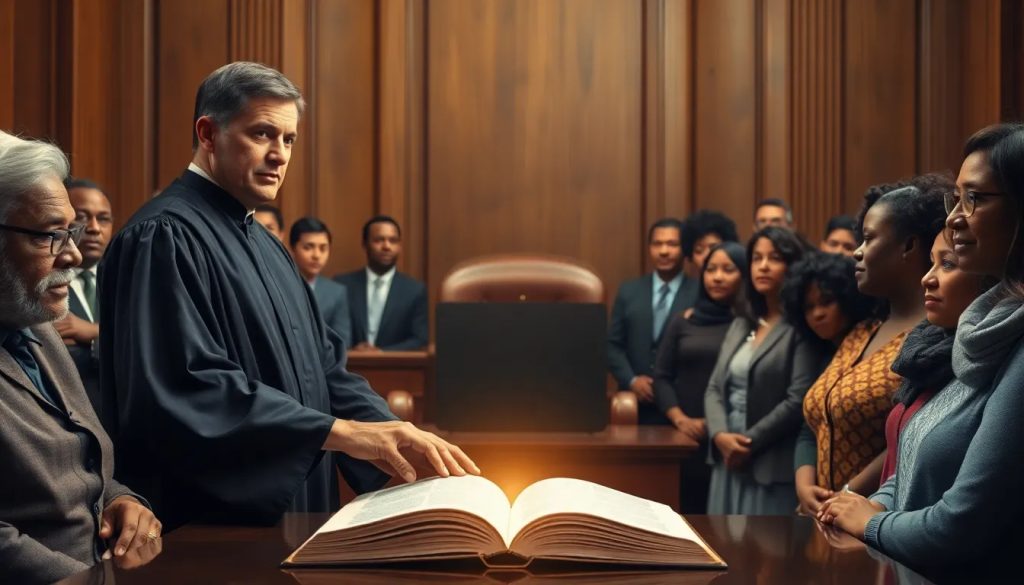
Pardons are a controversial tool that spark intense debate about their use and justification. In various countries, this measure is used by the executive branch to grant clemency to certain criminals, raising questions about fairness and justice. In this article, we explore pardons in depth and their relationship to the supreme value of justice.
What are pardons and how do they work?
Pardons are administrative acts granting clemency to a person convicted of a crime, allowing their sentence to be reduced or fully remitted. This legal measure aims to offer certain offenders a second chance, based on principles of justice and humanity.
In Spain, the process for granting pardons is governed by a law dating from 1870, which sets out the necessary requirements and procedures. Generally, pardons may be requested by the convicted person or by third parties on their behalf. However, granting them is at the government's discretion, which has led to debate about their use.
Pardons are not exclusive to Spain. In other countries, such as the United States, presidents also have the power to grant pardons, prompting controversy and criticism, as in Spain.
What are the controversies surrounding pardons?
Pardons have drawn considerable criticism, particularly when they are political. In Spain, the pardon granted to those imprisoned over the procés sparked intense debate about whether the measure was an act of justice or a form of political manipulation.
- Public perceptions of pardons can be influenced by the political context.
- Pardons may be seen as a way of rewarding criminal behavior, undermining trust in the justice system.
- Decisions on pardons may be subject to political pressure and negotiations, adding to the controversy.
Some also argue that pardons should be more transparent and subject to stricter oversight. A lack of clarity around the criteria for granting them can lead to the arbitrary use of this power.
How are pardons applied in different countries?
Pardons are applied and regulated differently under each country's laws. In the United States, the president has the power to pardon federal offenders, while in Spain that power lies with the government.
In Mexico, the debate over pardons is also ongoing, as the administration has proposed that clemency can replace punishment in certain cases. This has sparked debate about the impact on justice and the country's criminal policy.
- United States: The presidential pardon process is discretionary and often controversial.
- Spain: Pardons are governed by a 1870 law, and their use has been controversial in recent years.
- Mexico: The administration proposed a new perspective on clemency, which could affect the criminal justice system.
Each country faces its own challenges and criticism regarding the granting of pardons, reflecting the complexity of this measure in different contexts.
What role do pardons play in Spanish politics?
In Spain, pardons have played a significant role in politics, particularly in relation to territorial conflicts and governance issues. The pardons granted to Catalan pro-independence leaders sparked intense criticism and protests.
Decisions on pardons can influence how the government is perceived and its ability to manage conflict. Pardons are sometimes seen as a tool for reconciliation, but they may also be viewed as a sign of political weakness.
Public opinion plays a crucial role in this context, as acceptance or rejection of pardons can affect the legitimacy of the government in power.
Are there limits or restrictions on pardons?
Pardons are not absolute and are usually subject to certain limits and conditions. For example, in Spain, some offences cannot be pardoned, such as those related to corruption or crimes against humanity.
It is essential that pardons be granted responsibly and transparently, so that they do not become a tool for impunity. The criteria for granting pardons should be clear and accessible to prevent future misunderstandings and controversy.
In addition, some countries have proposed the need for a stronger legal framework to regulate the granting of pardons and ensure they are used fairly and equitably.
What are the social implications of pardons?
Pardons can have a significant impact on society, particularly on how justice is perceived. Granting pardons can create public distrust, as people may feel that justice is not being applied fairly.
- The perception of impunity can erode trust in the judicial system.
- Pardons can influence citizens' behaviour, leading them to think that certain offences have no consequences.
- In some cases, pardons can promote reconciliation and social peace.
Therefore, it is essential that debate about pardons and their use consider the social implications and seek a balance between clemency and justice.
Related questions about pardons and their impact on justice
Which offences cannot be pardoned?
In several countries, specific offences cannot be pardoned. In Spain, for example, crimes against humanity and certain corruption-related offences are excluded from this measure. This is intended to ensure that those responsible for serious crimes do not evade the consequences of their actions.
Excluding certain offences from pardons reflects a commitment to justice and the protection of victims' rights. It also sets a limit intended to prevent those in power from abusing this tool.
What is the difference between a pardon and forgiveness?
A pardon and forgiveness are related concepts, but they have important differences. A pardon refers to the complete or partial remission of an imposed sentence, while forgiveness is a moral act that involves giving up the desire for revenge or punishment.
A pardon can be seen as a legal tool intended to address specific situations, while forgiveness is broader and relates to personal or social reconciliation. This means that although the two concepts can coexist, they have different applications and meanings in the legal and social spheres.
Is granting a pardon a discretionary act of public administration?
Yes, granting a pardon is a discretionary act of public administration. This means that whether one is granted depends on the judgement and decision of the competent authorities, which can be controversial. Discretion allows for some flexibility, but it can also open the door to potential abuses or controversial decisions.
Transparency in the process of granting pardons is essential to maintaining public trust and minimising criticism of their use. A clear legal framework setting out the criteria and procedures can help ensure that pardons are used fairly.
What is the prerogative of mercy?
The prerogative of mercy refers to a ruler's power to pardon or reduce the sentences imposed on convicted individuals. It is an act of clemency that, in theory, seeks to promote justice and the individual's rehabilitation.
This mechanism can be seen as an opportunity to correct injustices or judicial errors, although it should be used prudently and on sound grounds to avoid the perception of impunity. The prerogative of mercy is therefore an important concept that reflects the relationship between criminal law and social justice.