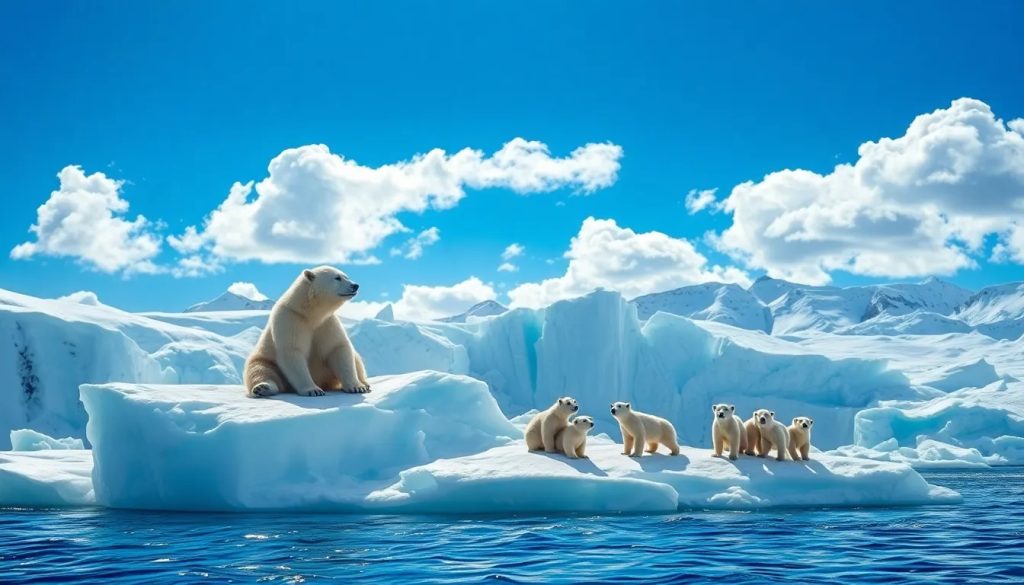
Cannibalistic behavior among polar bears has attracted interest and concern in scientific and environmental circles. This phenomenon, once considered rare, has become more frequent in recent years, raising questions about its underlying causes and implications for the species.
The increase in cannibalism among polar bears is intrinsically linked to changes in their habitat and food availability. In this article, we’ll explore the factors that have contributed to this behavior, as well as its consequences for polar bears and Arctic wildlife in general.
How does the climate crisis affect polar bear behavior?
The climate crisis has had a significant impact on the behavior of polar bears (Ursus maritimus). Global warming has caused temperatures to rise, which in turn has led to Arctic ice melt. This phenomenon is changing these animals’ hunting and migration patterns.
Polar bears rely on sea ice to hunt seals, their main food source. As the ice shrinks, bears are forced to travel farther in search of food, increasing competition among them.
Stress caused by food shortages has led some bears to adopt more aggressive behaviors, including cannibalism. The climate crisis not only affects resource availability but also changes social interactions among bears.
Why has cannibalism among polar bears increased?
The increase in cannibalism among polar bears can be attributed to several factors. First, the decline in Arctic sea ice has limited hunting opportunities for these mammals. According to experts, this behavior has become more common, particularly among hungry males that attack females with cubs.
Researchers such as Ilya Mordvintsev have documented a notable increase in cases of cannibalism. This behavioral change is directly linked to food shortages and growing competition among bears for available resources.
Cannibalism can also be viewed as a survival strategy. When opportunities to hunt seals are scarce, some bears choose to feed on others of their own species, giving them access to a food source they would otherwise lack.
What role do humans play in polar bear cannibalism?
Human activity has had a significant impact on polar bear habitat. Activities such as shipping and resource extraction have altered traditional hunting grounds. The destruction of these natural habitats limits hunting opportunities and increases competition among bears.
In addition, global warming, exacerbated by human activity, has contributed to ice melt. This phenomenon not only reduces bears’ habitat but also affects the wildlife they prey on, such as seals.
Human activity can also indirectly influence polar bear behavior. For example, changes in migration routes caused by human activities can disorient these animals, bringing them into contact with other bears and increasing the likelihood of cannibalism.
What are the consequences of cannibalism among polar bears?
Cannibalism among polar bears has several consequences, both for individual bears and for the population as a whole. First, this behavior can affect the reproduction of the species. Females that are attacked and eaten may be carrying cubs, reducing the total number of polar bears in the area.
In addition, competition for food can lead to more conflicts between bears, which may result in more injuries and shorter lifespans. Cannibalism can be a sign of environmental stress, indicating that the polar bear population is in a critical situation.
A decline in the polar bear population also affects the Arctic ecosystem as a whole. As an apex predator, a decline in their numbers can trigger cascading effects on the ecosystem's flora and fauna, disrupting the natural balance.
How has polar bear habitat in the Arctic declined?
Polar bear habitat has been drastically affected by global warming. Over the past 25 years, Arctic ice is reported to have declined by 40%, limiting the areas where these animals can hunt and reproduce.
Traditional hunting grounds are being transformed into shipping routes due to maritime traffic. This not only reduces their habitat but also increases the likelihood of encounters with humans, which can be dangerous for bears.
The melting ice also means that polar bears must adapt to new conditions and search for food in unfamiliar territories, posing additional challenges to their survival.
Is cannibalism among polar bears common?
Cannibalism among polar bears, though once rare, has become more common in recent years. Research has revealed that this behavior has increased as environmental conditions have deteriorated.
Experts have noted that males are more likely to hunt females with cubs, indicating an adaptive response to food scarcity. This trend is concerning, as it suggests that the polar bear population is facing significant stress due to climate and human-driven changes.
An increase in cannibalism may indicate that the species is at risk, and it is vital to address the underlying causes to protect its habitat and ensure its future survival.
Frequently Asked Questions About Cannibalism Among Polar Bears
What is the polar bear pickup line?
The term “polar bear pickup line” is not directly related to these animals' behavior. However, it could be interpreted in a humorous or cultural context. In reality, polar bears do not have a “pickup line” in the human sense, since they communicate through sounds and actions associated with their social and aggressive behavior, especially when hunting or defending their territory.
Why can't humans eat polar bear meat?
Polar bear meat is not suitable for human consumption due to its high vitamin A content and the risk of exposure to toxic contaminants that accumulate in the animals' tissues. Eating polar bear meat can cause severe poisoning, such as hypervitaminosis A, which can be fatal. For these reasons, it is best to avoid eating it.
Is Arturo the polar bear still alive?
Arturo was a famous polar bear who lived at the Mendoza Zoo in Argentina. Sadly, Arturo died in 2016. His case sparked widespread debate about animal welfare and the conditions in which animals are kept in captivity, especially species that require specific habitats, such as polar bears.
Do polar bears eat meat?
Yes, polar bears are carnivores, and their diet consists mainly of meat. Their favorite food is seals, which they hunt on the sea ice. However, when food is scarce, polar bears may turn to other animals, including other polar bears, highlighting the impact of food shortages on their behavior.