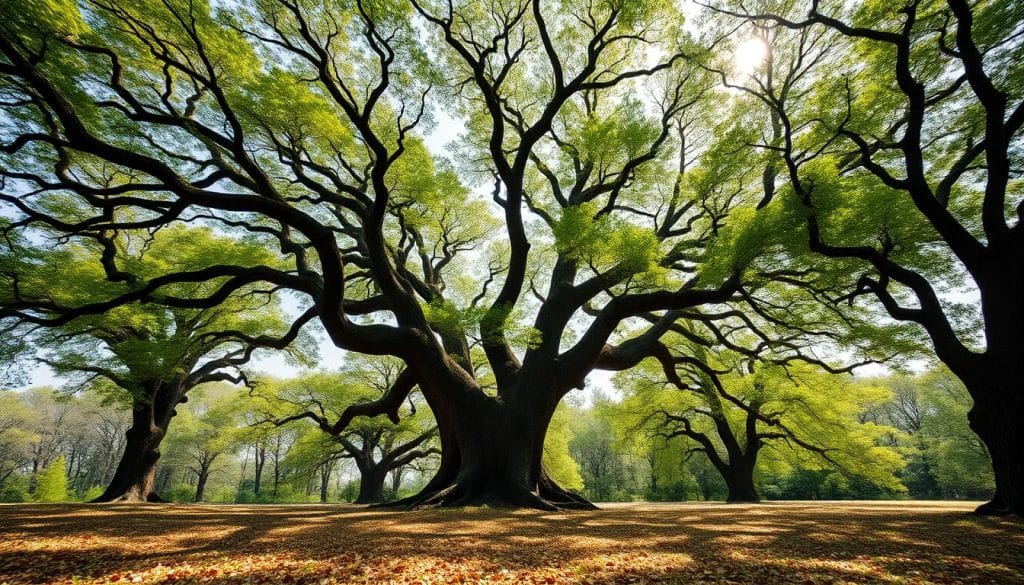
Prehistoric trees take us back to distant eras when vegetation was radically different from what we know today. In this article, we’ll explore the fascinating history of these trees, their characteristics, and how some species have managed to survive for millions of years.
In particular, we’ll focus on the araucarias, trees that have weathered adversity and witnessed the planet’s evolution. Join us on this journey to learn more about these prehistoric plants and their vital importance to today’s ecosystem.
Araucariaceae: The World’s Rarest Prehistoric Trees That Survived Extinction
Araucarias are a group of trees belonging to the Araucariaceae family. These trees have existed for approximately 200 million years and are considered some of the oldest on the planet. Their resilience and adaptability have enabled them to survive drastic climate changes and the extinction of many other species.
There are around 20 species of araucaria, found mainly in tropical and subtropical regions. Some of these species include:
- Araucaria araucana (monkey puzzle tree), native to Chile and Argentina.
- Araucaria angustifolia, known as the Paraná pine.
- Araucaria heterophylla, also known as the Norfolk Island pine.
Conserving these species is vital, as many are threatened by deforestation and climate change. Protecting these araucarias is essential to maintaining biodiversity and the resilience of the ecosystems they inhabit.
What trees existed in prehistoric times?
In prehistoric times, vegetation was radically different. Forests were made up mainly of ancient conifers, ferns, and other plants that may seem strange today. Prehistoric trees included species such as Ginkgo biloba and araucarias, which have adapted to changes over time.
Fossil studies have enabled us to reconstruct the vegetation of past eras, revealing that the Carboniferous, for example, was a period with great diversity of plant species. During this era, ferns and conifers dominated terrestrial flora.
Prehistoric trees also included fire trees, which were able to withstand forest fires. These trees played a crucial role in the development of ecosystems by providing shelter and food for various species.
What is the name of the prehistoric tree?
One of the best-known prehistoric trees is Ginkgo biloba, which dates back more than 270 million years. This tree is famous for its resilience and for being a living fossil, meaning it has changed very little over the years.
Ginkgo biloba is known for its fan-shaped leaves and its ability to adapt to different climatic conditions. Despite its ancient origins, it is still cultivated in many parts of the world, both for its ornamental value and its medicinal properties.
Another significant prehistoric tree is the Sequoiadendron giganteum, also known as the giant sequoia. This impressive tree can live for more than 3,000 years and is one of the largest trees in the world. Its longevity and size make it a symbol of resilience in nature.
What Kinds of Trees Existed in the Past?
Before the modern era, conifers and ferns dominated the planet. These kinds of trees formed vast forests that covered large areas of land. During the Mesozoic Era, conifers were especially common and adapted to thrive in different climatic conditions.
Among the trees that existed were cycads, plants with characteristics similar to those of palm trees. Although they are less common today, these ancient plants played a fundamental role in Earth's vegetation millions of years ago.
In addition, prehistoric plant species such as pines and firs have left a lasting legacy. Many of these species have evolved, but their roots can be traced back to distant eras, revealing the incredible history of life on our planet.
Which Prehistoric Plants Still Exist Today?
Several prehistoric plants are still alive today. Some of the most notable include:
- Ginkgo biloba: This tree is a living fossil that has survived mass extinctions.
- Wollemi Pine: Discovered in Australia, this tree was thought to have been extinct for millions of years.
- Ferns: These plants have existed since the Devonian Period and remain common today.
The existence of these plants gives us a direct link to the past and reminds us of life's resilience on Earth. Each of these species has adapted its characteristics to survive through the ages.
What Characteristics Do Ancient Plants That Still Exist Have?
Ancient plants that have survived to the present day have some unique characteristics. First, many of them are highly resistant to adverse conditions, allowing them to thrive in challenging environments. For example, Ginkgo biloba is known for its ability to withstand pollution and climate change.
These plants also tend to have deep root systems that help them access water and nutrients, even in poor soils. In addition, many have developed leaves or other structures that minimize water loss, a crucial adaptation in dry climates.
Genetic diversity also plays an important role in these species' survival. Genetic variation allows some plants to adapt to changes in their environment, increasing their chances of long-term survival.
What Are the Oldest Tree Species?
Among the oldest tree species we know of is Pinus longaeva, a pine that can live for more than 4,800 years. Known as the Bristlecone pine, it is found in the mountains of California.
Another notable example is Taxodium distichum, or bald cypress, which can also live for millennia. These trees are famous for their ability to grow in flooded soils and are essential to wetland ecosystems.
The longevity of these species is not only impressive, but also offers us a window into the past, allowing us to study climate and the environment over the years.
What Medicinal Plants Were Used in Prehistory?
During prehistory, plants were essential to human survival, and many had medicinal properties. Some of the most widely used plants included:
- Ferns: Used to treat wounds and as anti-inflammatory remedies.
- Ginkgo biloba: Known for its properties that support blood circulation.
- Aromatic plants: Such as rosemary and sage, which were used in natural remedies.
These plants were valuable not only for their medicinal uses, but also formed part of cultural and spiritual rituals. Knowledge of them was passed down from generation to generation, reflecting the connection between humans and nature.
What Are the Characteristics of the Ginkgo biloba Tree?
Ginkgo biloba is an exceptional tree for several reasons. Its fan-shaped foliage is easy to recognize and adds ornamental appeal to many parks and gardens. It is also one of the few trees to have survived the mass extinction that wiped out the dinosaurs.
This tree is notably resistant to diseases and pests, making it a popular choice for urban planting. Its ability to tolerate polluted conditions also makes it ideal for urban areas.
Finally, it is credited with medicinal properties, such as improving memory and increasing blood flow. This has led to growing interest in cultivating and using it in modern medicine.
Related Questions About Prehistoric Trees
What Trees Existed in Prehistory?
In prehistory, conifers and ferns were dominant. These trees formed vast forests and were known for their ability to adapt to a range of climatic conditions. Species such as pines, firs, and cycads were common, and their legacy lives on in today's flora.
What Is the Name of the Prehistoric Tree?
One of the best-known prehistoric trees is Ginkgo biloba, a living fossil that has existed for more than 270 million years. Its resilience and adaptability make it a fascinating species, as well as a symbol of Earth's plant history.
What Kinds of Trees Existed in the Past?
Before the modern era, forests were dominated by conifers and ferns. They included cycads and various species of pine that have left a legacy in today's vegetation, reflecting the evolutionary history of plants.
What Plants Were Used in Prehistory?
Plants used in prehistory included ferns and various herbs that were used to treat illnesses and provide food. Many of these plants had medicinal properties and were essential to the survival of ancient communities, forming a link between nature and human culture.