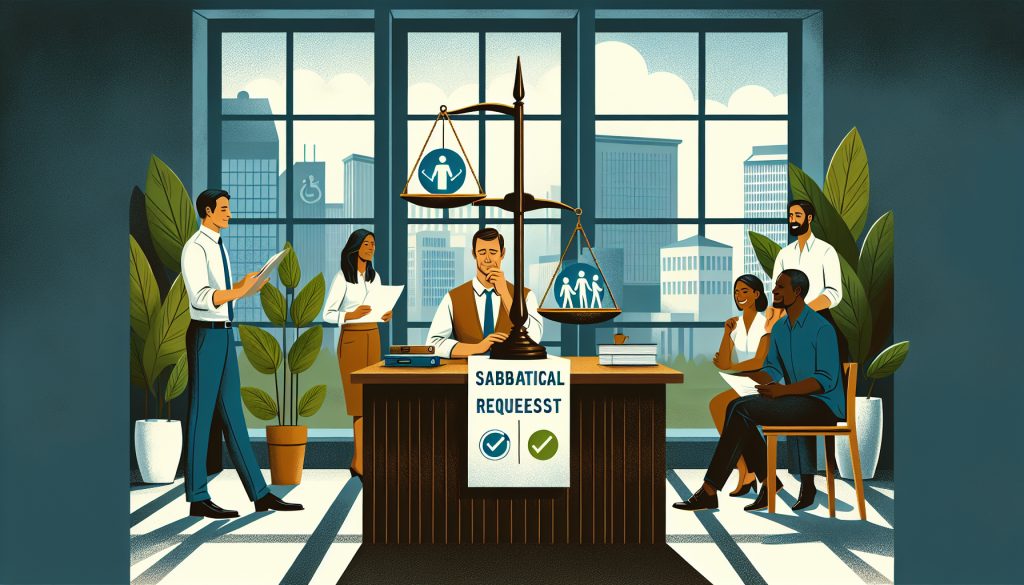
A leave of absence allows employees to temporarily suspend their employment contract for various reasons. This option can be very appealing to those who need a break or want to attend to personal matters. However, it is essential to understand the pros and cons of taking a leave of absence before making a decision.
In this article, we'll explore what a leave of absence is, the requirements for requesting one, the different types available, and the consequences it may have. We'll also look at the advantages and disadvantages of this employment option.
What are the pros and cons of taking a leave of absence?
Taking a leave of absence may seem like an ideal solution for many people, but it's important to consider both the advantages and the disadvantages of this decision.
- Pros:
- An opportunity to attend to personal matters without losing your job.
- Your length of service with the company is preserved.
- The opportunity to focus on personal projects or travel.
- The right to return to your job after the leave of absence.
- Cons:
- Possible loss of income during the leave of absence.
- Potential difficulties returning to work.
- An impact on your career if the leave is too long.
- In some cases, maintaining the employment relationship may be difficult.
It's essential to assess your personal circumstances before deciding whether to request a leave of absence. Sometimes, your expectations may not match reality when you return to work.
What is a leave of absence from work?
A leave of absence is an employee's right to temporarily suspend their employment contract, in both the public and private sectors. This right is governed by the Workers' Statute, which sets out the rules and requirements for requesting one.
There are different types of leave, each with its own characteristics. These include:
- Voluntary leave of absence: Allows an employee to take time away from work without having to justify the decision.
- Mandatory leave of absence: Applies when an employee must leave their position to take up public office.
- Leave of absence to care for children: Intended for those who need to care for their minor children.
The request must be made in writing, and the employer is required to respond in the same format. Keep in mind that each type of leave may have specific requirements and different consequences.
How do you request a leave of absence?
The process for requesting a leave of absence from work is not complicated, but you should follow certain guidelines to make sure it is approved. The steps generally include:
- Check your contract: Make sure your employment contract does not rule out the possibility of taking a leave of absence.
- Prepare your request: Write a formal letter or email requesting a leave of absence and specifying its duration and reason.
- Submit your request: Submit your request to your employer in writing, ideally giving at least 15 days' notice.
- Wait for a response: Your employer must respond in writing, either approving or rejecting the request.
It's a good idea to consult an employment lawyer to make sure all the requirements are met and the correct procedures are followed. This will help prevent future problems and ensure your request is handled appropriately.
What are the consequences of taking a leave of absence?
Requesting a leave of absence can have various positive and negative consequences. The main consequences of taking a leave of absence from work include:
- Impact on income: Employees do not receive a salary during their leave of absence, which may affect their financial situation.
- You may not return to the same position: Depending on the length of the leave, there may be changes to the company's structure.
- Returning to work: Although you have the right to return, there may be difficulties reintegrating into the workplace.
It's essential to weigh these consequences before making a decision. A leave of absence can be an excellent option, but you should always consider how it may affect your long-term career.
What is the process for returning to work after a leave of absence?
The process of returning to work after a leave of absence is usually straightforward, but it depends on several factors. Here are some important points to consider:
- Advance notice: It's a good idea to notify your employer in advance that you intend to return, preferably in writing.
- Review of your position: In some cases, your original position may no longer be available, and your employer may offer you another suitable position.
- Required documentation: You may need to provide documents confirming that the reasons for which you requested the leave have been met.
Employers are required to respect the right to return to work, but it's important to follow up on the process to avoid any issues.
Are there different types of leave of absence from work?
Yes, there are different types of leave of absence from work, each with its own characteristics. The main types are:
- Voluntary leave of absence: Allows employees to request time off without having to provide a reason.
- Compulsory leave of absence: This applies when an employee is elected to public office and must leave their position.
- Leave of absence to care for children: This option is for parents who need to take time to care for their minor children.
Each type of leave of absence has specific requirements and procedures that must be met for the application to be valid.
What requirements must I meet to request a leave of absence?
To request a leave of absence from work, you must meet certain requirements set out in the Workers' Statute. These include:
- Having worked for the company for at least one year.
- Submitting a written request specifying the duration and reason.
- Meeting the notification deadlines set by the company.
It is important to review your employment contract and the company's internal policies, as they may set additional requirements beyond those established by law.
Related questions about the effects of taking a leave of absence
What do I lose if I take a leave of absence?
Taking a leave of absence may mean temporarily losing your salary, which can affect your financial situation. There is also a risk that you may not return to the same position or working conditions as before. It is essential to consider whether the time you need away is worth the potential losses.
What are the consequences of taking a leave of absence?
The consequences of taking a leave of absence include loss of income, possible changes to the company's structure, and difficulties returning to work. It is also important to bear in mind that an extended leave of absence may have a negative impact on your career.
Which is better: taking a leave of absence or resigning?
Choosing between taking a leave of absence and resigning depends on the employee's personal circumstances. A leave of absence allows you to keep your position and seniority, while resigning ends your employment contract. Those planning to return to their position may benefit more from taking a leave of absence.
What am I entitled to be paid if I take a leave of absence?
Employees do not receive a salary during a leave of absence because their employment contract is suspended. However, if the leave is requested for reasons such as caring for children, they may be entitled to certain social benefits. It is essential to find out about the legislation and company policies before making a decision.