The Caga Tió tradition is a deeply rooted Christmas custom in Catalonia. It centres on a log that becomes a symbol of family joy and celebration throughout the festive season. Each year, families lovingly prepare the Caga Tió, feeding it as they wait for Christmas Eve. The ritual of beating the log and singing songs reflects the playful way children engage with this beloved tradition.
The rural origins and evolution of Catalonia’s Caga Tió tradition
The Caga Tió tradition has deep roots in Catalan culture and has evolved over the years. A central part of Christmas celebrations, it evokes a rich history that reflects the community’s connection with nature and family.
The meaning of the log in Christmas celebrations
In the context of festive celebrations, the log symbolises fertility and abundance. It represents the arrival of spring, celebrating the renewal of life after winter. This symbol brings families together in a ritual of hope and joy.
The history of the wooden log in Catalonia
Using a log as a festive figure dates back to ancient times, with practices originating in the pre-Christian era. Originally used as fuel, the log was gradually adopted as a symbol to bring joy to Christmas celebrations, giving rise to this tradition.
The winter solstice and the Caga Tió ritual
The Caga Tió is closely linked to the winter solstice, marking a pause between the cold weather and nature’s renewal. During this period, the log ritual becomes a celebration filled with songs and customs, as children eagerly await the gifts it brings.
Preparing the Caga Tió in Catalan homes
Preparing the Caga Tió is a charming process steeped in tradition that begins each December in Catalan homes. From choosing the log to caring for it every day, each step is carried out with love and dedication.
Choosing the log and traditional decorations
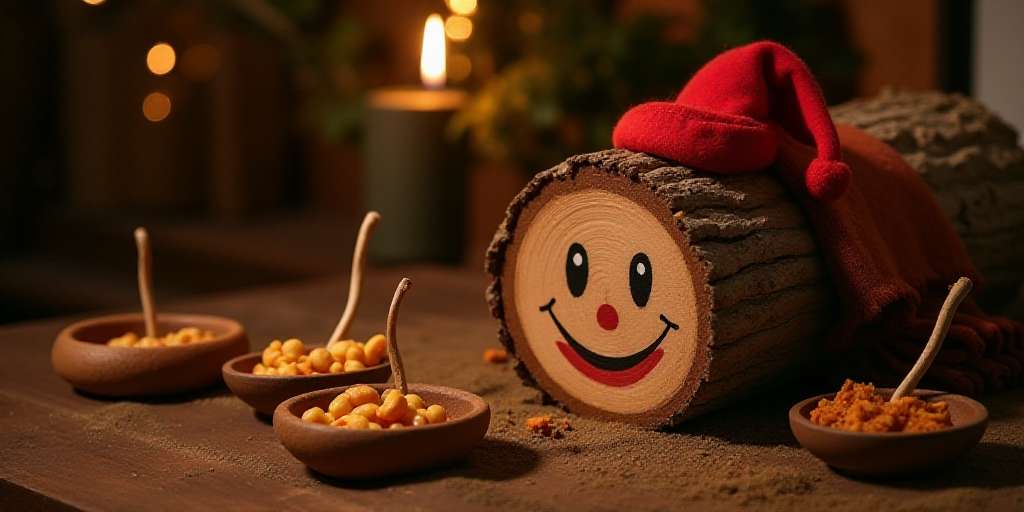
The first step is to choose a suitable log. It can be large or small, but it must be sturdy enough to withstand being hit. It is usually decorated with traditional features to make it more appealing, such as painted eyes and a barretina, the typical Catalan hat.
Feeding the log sweets and fruit
Once it has been set up, the feeding begins. It is offered sweets, fruit and other symbolic foods. Popular choices include:
- Biscuits
- Straw
- Various fruits
This ritual highlights the care children give the log, symbolising their affection and their hope that it will do a good ‘poop’ at Christmas.
The Caga Tió’s blanket and warmth
To keep the log warm, it is covered with a blanket. The blanket not only protects the Caga Tió from the cold but also gives it a cosy appearance. On Christmas Eve, the children excitedly lift the blanket, anticipating the gifts they will find underneath.
The most eagerly awaited night: the beating ritual and songs
The Caga Tió’s big moment comes with the Christmas Eve celebration. This ritual, full of excitement and tradition, brings the whole family together around the log.
Sticks and singing: the traditional song
The children join in enthusiastically, using sticks to beat the Tió. As they do, they sing a traditional song asking the log to ‘poop’ out gifts. Shouted out with great excitement, the song is an essential part of the ritual, creating an atmosphere of joy and anticipation.
Songs and variations in Catalan tradition
There are many versions of the song that accompanies the Caga Tió. Each family may have its own adaptation, adding a personal touch to the celebration. Some verses may vary according to the children’s preferences, with different gifts or sweets included.
Beating the log to make the Tió poop
Beating the log is more than a symbolic act; it represents an active interaction between the participants and the tradition itself. As the rhythm of the blows grows faster, the excitement in the room reaches its peak. The reveal of the sweets and gifts beneath the blanket is the moment everyone has been waiting for.
Modern-day features of the Caga Tió in Catalonia
Today, the Caga Tió has evolved, adapting to the preferences of new generations. This evolution is reflected in several aspects that have modernised the celebration.
A more human face: the smiling log
These days, the Caga Tió often has a more anthropomorphic appearance. Its design includes a smiling face, making it more welcoming to children. This humanisation helps children see the log as a friend and companion during the celebration.
The traditional Catalan hat and clothing of the Tió
The Caga Tió’s clothing also reflects Catalan tradition. It wears a barretina, the region’s traditional hat, which has become a symbol of identity. This detail is not merely decorative; it adds a cultural element to the figure.
Gifts and sweets: small, symbolic treats
The gifts found beneath the log are usually small and symbolic. Common items include sweets, toys and treats. This practice captures the magic of childhood and strengthens family bonds during this much-anticipated time of year.
How it compares with other Christmas traditions in the region
The diversity of Catalan traditions enriches the Christmas celebrations. Among the best-known customs is the Caganer, with its distinctive symbolism.
The Caganer in the nativity scene and its symbolism
The Caganer, a distinctive figure in the nativity scene, depicts a peasant defecating. This image may seem shocking, but it symbolises fertility and good luck. The figure is thought to bring prosperity to the home, and modern versions featuring contemporary characters have also appeared.
The Caga Tió in Aragón and its variations
The Caga Tió tradition is also found in Aragón, although it has some significant variations. The log shares some features with the Catalan cagatió, but is accompanied by its own local rituals and songs, enriching the region’s Christmas cultural heritage.
Catalan popular culture and complementary traditions
Catalan culture includes other festive elements that complement the celebrations. Figures such as the Caganer and customs such as rural family dinners create a festive atmosphere. These practices strengthen the sense of community and family togetherness at Christmas in the region.
Key dates and the cultural context of the Caga Tió
The Caga Tió festivities take place during a clearly defined period spanning December and early January. These dates are rich in symbolism and mark important moments in the Christmas season for many Catalan families.
The Feast of the Immaculate Conception and the start of December
On 8 December, the Feast of the Immaculate Conception is celebrated, marking the start of the Christmas season. On this day, families choose and prepare the log that will take centre stage in their celebrations. It is a time for gathering and joy, when family traditions come to life.
Christmas Eve and Christmas Day
Christmas Eve and Christmas Day are the highlights of the celebration. On these nights, children take part in the ritual of hitting the log with sticks as they sing, eagerly awaiting the gifts that will emerge from inside it. The excitement is palpable, creating lasting memories.
Three Kings’ Day and the giving of larger gifts
6 January, known as Three Kings’ Day, is another significant date. On this occasion, the larger, more symbolic gifts are given, bringing the festive season to a close. This day complements the Caga Tió tradition, strengthening the Christmas spirit and family bonds.
Frequently asked questions about the Catalan Caga Tió tradition
There are many questions about the Caga Tió tradition, which reflects Catalonia’s rich culture. Here are some of the most frequently asked questions.
Why is the log hit with sticks?
Hitting the log with sticks is an essential part of the ritual, symbolising the children’s active participation in the Caga Tió tradition. It is believed that this helps it “poop out” the gifts. The children hit the log while singing festive songs, creating an atmosphere of joy and celebration.
What do the gifts from the Tió symbolise?
The gifts found beneath the Caga Tió’s blanket represent abundance and generosity. They are usually small sweets, toys and treats that reflect the spirit of the festivities. This symbolism is linked to nature’s renewal and the desire to share with family.
How has the tradition changed in recent decades?
The Caga Tió tradition has evolved considerably. Today, the logs have smiling faces and wear barretinas. The Tió has also become more humanised, making it more appealing to children. This transformation has helped the tradition endure and adapt to new generations.