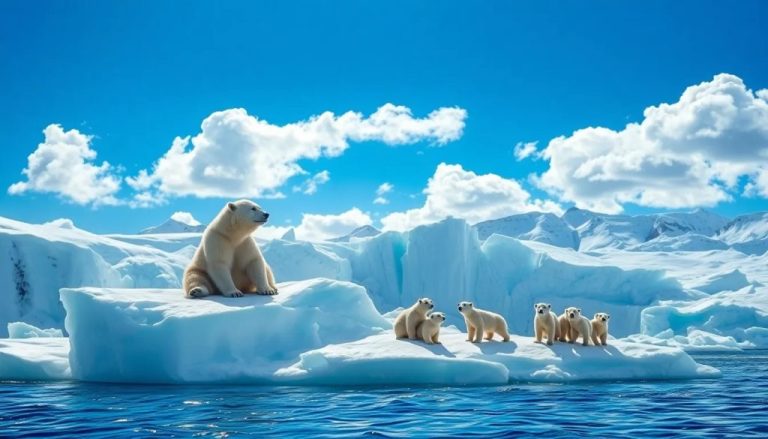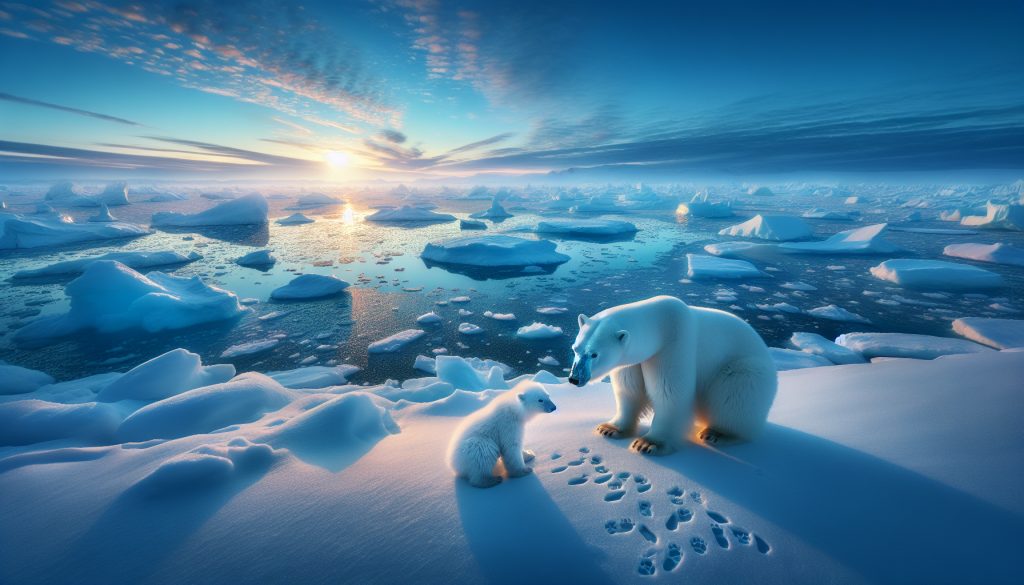
The situation for polar bears has become alarming in recent years. Recent research suggests that the polar bear population will decline by a third in the near future, posing serious challenges to their survival. This article will explore the factors contributing to this drastic population decline and the importance of their habitat.
Climate change, melting Arctic ice and pollution are just some of the factors affecting this iconic species. The situation is critical and requires urgent attention to ensure the survival of polar bears and their ecosystem.
How is the polar bear population doing?
The polar bear population is currently estimated at around 26,000 individuals. However, this population is at risk of extinction, with projections suggesting that a third of them could disappear in the next 35 years. This population decline is largely due to the impact of climate change and the loss of sea ice.
Polar bears depend heavily on sea ice to hunt seals, their main food source. As the ice melts, their access to these animals is seriously compromised, directly affecting their ability to survive.
Recent studies have shown that these adverse conditions are damaging not only the number of polar bears, but also their health and reproductive capacity. Habitat loss and reduced access to essential resources are critical factors in the current state of this species.
What effects does melting ice have on polar bear populations?
The melting of Arctic ice has devastating consequences for polar bears. As sea ice declines, bears are forced to swim longer distances to find food, increasing their risk of exhaustion and reducing their chances of reproducing.
- Sea ice is essential for hunting seals, and its disappearance reduces the availability of this food source.
- Polar bears are forced to come into contact with humans more often in search of food, which can lead to conflict and conservation challenges.
- The lack of ice negatively affects bears' health, increasing cub mortality and reducing reproduction rates.
In addition, climate change is also exposing polar bears to new threats, such as plastic pollution and other contaminants that affect their health. The accumulation of these substances in the food chain can cause reproductive problems and other health issues.
What will happen to polar bears in the future?
If current trends continue, the future for polar bears looks bleak. As global temperatures rise, the polar bear population will decline by a third, increasing the risk of extinction in a relatively short time. Climate models suggest that by 2050, the situation could become irreversibly critical.
Changes in climate patterns will also affect polar bears' migration and behaviour. This could increase competition for resources between them and other species, making their survival even more difficult.
In addition, the indirect effects of climate change, such as increases in disease and parasites, will also affect the health of these animals. Without intervention, polar bears may face a future without the sea ice they need to survive.
When will the polar bear become extinct?
Estimates of when polar bears may become extinct vary, but many experts agree that if drastic action is not taken to mitigate climate change, the species could face extinction within 50 years. The extinction of polar bears would not only be a tragedy for Arctic wildlife; it would also symbolise the environmental crisis facing us globally.
The most pessimistic scenarios suggest that, with temperatures continuing to rise, the species could disappear even sooner, possibly by 2100, unless effective measures are implemented to protect its habitat.
The extinction of polar bears would have a domino effect on the Arctic ecosystem, affecting other species and significantly disrupting the food chain in their habitat. Conservation is therefore crucial not only for polar bears but also for ecological balance as a whole.
The importance of sea ice for polar bear survival
Sea ice is vital to the survival of polar bears. It provides essential habitat for hunting seals, their main source of energy. Without ice, polar bears not only struggle to find food but also face challenges with reproduction.
- Sea ice acts as a hunting platform, allowing polar bears to reach their prey.
- The loss of ice also affects bears’ social and migratory behavior, impacting their ability to reproduce.
- Sea ice is crucial to the overall health of the polar bear population, affecting their diet and, in turn, their long-term health.
Without these ice platforms, polar bears are forced to adapt to a changing and hostile environment, which could lead to higher cub mortality and a decline in the population. The link between sea ice and polar bear survival is undeniable and critical.
Actions Needed to Protect Polar Bears
Polar bear conservation requires coordinated action worldwide. This includes reducing greenhouse gas emissions and implementing effective policies to protect their habitat.
- Reduce pollution and the use of plastics that harm the marine ecosystem.
- Introduce stricter regulations on fishing and resource extraction in the Arctic.
- Support scientific research to monitor populations and their habitat.
- Promote education and awareness about the importance of polar bears and their conservation.
In addition, it is vital to foster international cooperation to address climate change effectively. Local actions must join global efforts to ensure a viable future for polar bears and their habitat.
Frequently Asked Questions About the Status of Polar Bears
What Is the Polar Bear Population?
The polar bear population currently stands at approximately 26,000 individuals. However, as mentioned, the polar bear population is expected to decline by one-third in the near future due to factors such as climate change and the loss of sea ice.
How Does Melting Ice Affect Polar Bear Populations?
Melting ice has a dramatic impact on polar bears. Without sea ice, their access to food sources is compromised, increasing the risk of exhaustion and reducing their chances of reproducing. They also come into contact with humans more often, which can lead to conflicts and threaten their survival.
What Does the Future Hold for Polar Bears?
The future of polar bears is uncertain. If current trends continue, their population is expected to keep declining rapidly, increasing the risk of extinction within 50 years. Immediate action is needed to prevent a tragic outcome.
When Will Polar Bears Become Extinct?
Without effective measures to mitigate climate change, polar bears could face extinction in the coming decades. Experts suggest that we could see a drastic decline in their population, possibly before 2100, if appropriate solutions are not implemented.