The Camino de Santiago is a historically significant route walked by thousands of people every year. Its route across the Iberian Peninsula connects religious sites and offers pilgrims an unforgettable experience. This time, we’ll explore the Camino de Santiago to discover the meaning behind this ancient trail.
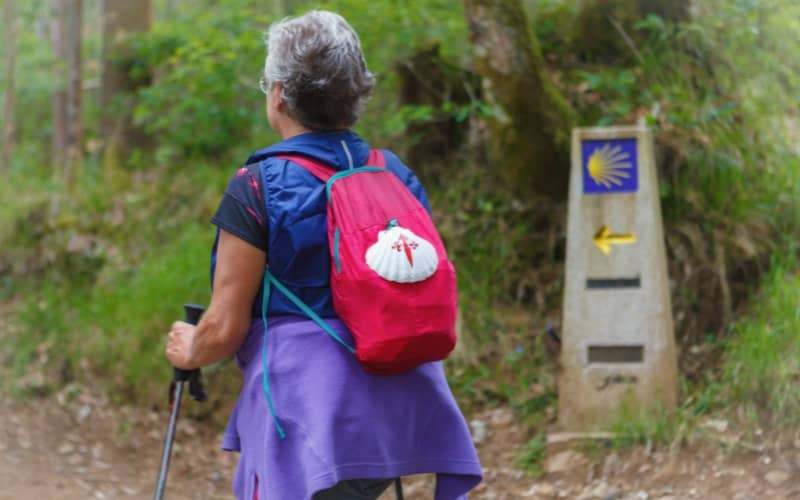
Discovering the benefits of walking the Camino de Santiago
Walking the Camino de Santiago is a unique and unforgettable experience. This ancient pilgrimage route takes walkers from the Basque Country in Spain to the Cathedral of Santiago de Compostela in Galicia, offering a range of emotional and spiritual benefits.
When walking the Camino de Santiago, you’ll have the chance to experience the culture of a new region, discover beautiful new landscapes, and enjoy the refreshing climate. You’ll also make new friends and enjoy the company of fellow walkers along the way.
Walking the Camino de Santiago gives you time to reflect on life and better understand yourself. The journey can be a way to clear your mind of everyday problems. Taking a relaxed pace also gives you the chance to unwind, reduce stress, and find inner peace. It can also help you overcome anxiety and depression.
On top of these benefits, walking the Camino de Santiago can also improve your physical health. Walking for hours each day can help strengthen your muscles, build endurance, and contribute to weight loss.
All in all, the Camino de Santiago offers many emotional and physical benefits. By following this ancient route, you can improve your mental and physical health, make new friends, discover Spanish culture, and marvel at the beauty of Spain’s natural landscapes.
Which route should you take on the Camino de Santiago?
The Camino de Santiago is one of the world’s oldest and most fascinating routes, continuing to attract thousands of walkers from all over. It is a medieval pilgrimage route that leads to the tomb of Saint James the Apostle.
The original route, known as the Camino Francés, runs from France to northern Spain, with many alternative routes leading to the same destination. The main route begins in Saint-Jean-Pied-de-Port (France) and follows the Bidasoa River to the village of Roncesvalles (Spain). From there, it continues through the Basque Country and the province of La Rioja, passing through the cities of Logroño, Burgos, León, and Astorga before reaching Santiago de Compostela. In total, the Camino Francés covers more than 800 km.
In addition to the Camino Francés, many other routes lead to the tomb of Saint James the Apostle, including the Camino Portugués, the Camino del Norte, the Camino Primitivo, the Camino Inglés, and the Camino del Ebro. Each route offers a unique travel experience, rich in history, culture, and incredible scenery.
In short, there are several routes you can take on the Camino de Santiago, but the best-known and most popular is the Camino Francés, which starts in Saint-Jean-Pied-de-Port and ends in Santiago de Compostela, covering more than 800 km.
What should I keep in mind before setting out on the Camino de Santiago?
Before setting out on the Camino de Santiago, keep a few important tips in mind to make your experience as positive as possible. First, make sure you bring the right gear. This includes a good backpack, comfortable footwear, waterproof clothing and even a camping tarp if you plan to camp. It’s also a good idea to bring some cash to pay for things like food and accommodation.
There are also some important safety rules to follow. These include wearing sunscreen, using insect repellent, drinking plenty of water to avoid dehydration and taking care when crossing roads.
It’s important to plan your route before setting out. This means knowing where the nearest hostel is, where you can buy food and where to find first-aid services. It’s also a good idea to bring a map so you’re prepared in case you get lost.
Finally, remember to enjoy the Camino. Although some preparation is necessary, don’t forget to relax and enjoy the journey. The idea is to spend your time taking in the history, culture and beauty of the places you pass through.
Can I do the Camino without carrying my luggage?
Yes. These days, it’s easy to hire a luggage transfer service on the Camino de Santiago to take your bags from one accommodation to another, making each stage much easier and more comfortable.
Do I need to get a pilgrim’s credential to do the Camino de Santiago?
It is not necessary to get a pilgrim’s credential to do the Camino de Santiago, but you can get one to prove that you completed the route. This credential is an official document that records the stages you have completed along the Camino. It is proof that you have completed the route and is required to obtain the Compostela, the official certificate awarded by the Xacobeo to those who complete the Camino. The credential is also useful if you want to stay overnight in hostels, as it shows that you intend to do the Camino de Santiago. Therefore, it is essential both for proving that you completed the route and for fully enjoying the Camino.