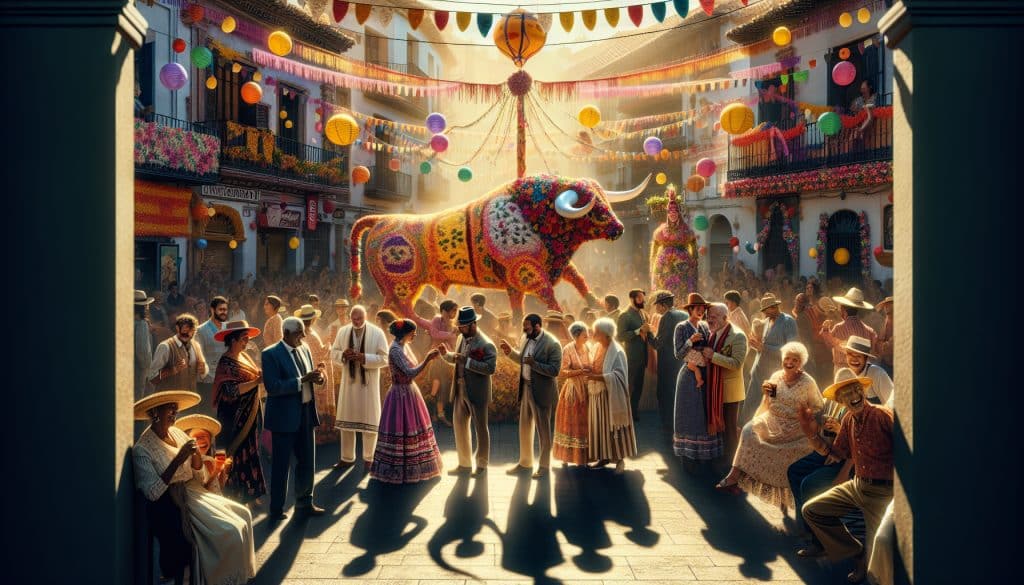
The expression “hasta el rabo, todo es toro” (“until the tail, everything is bull”) is a phrase rich in meaning, originating in the world of bullfighting. This saying warns us not to consider anything finished until it really is. In this article, we’ll explore its origins, its connection to Spanish popular culture, and the lessons it teaches us.
What Is the Connection Between This Expression and Bullfighting?
Bullfighting, as an art form and cultural tradition in Spain, is the context in which the expression “hasta el rabo, todo es toro” originated. In this setting, bullfighters must stay alert and focused until the very last moment, since any lapse in attention can lead to disaster. The phrase emphasizes the need to stay alert to possible changes in a situation.
In this sense, the expression serves as a metaphor for everyday life, reminding us that in any situation, whether at work or in our personal lives, we should remain cautious and not assume everything will turn out well until the matter is definitively settled.
Bullfighting is also a reflection of Spanish popular culture, where the bullfighter is a symbol of courage and skill. The phrase is used to illustrate how even experts must be prepared for the unexpected—a valuable lesson that extends beyond the world of bullfighting.
Where Does the Phrase ‘Hasta el Rabo, Todo Es Toro’ Come From?
The expression “hasta el rabo, todo es toro” (“until the tail, everything is bull”) comes from the language of bullfighting, where «rabo» refers to the bull’s tail. The phrase means that even after the bull has been caught and the bullfight is underway, caution is still needed until the animal is completely under control—that is, until the bullfight is over.
Over time, this expression has become popular and spread beyond the world of bullfighting, turning into a saying used in various everyday situations. Over the years, writers and speakers have used it in different contexts, highlighting its cultural significance.
The richness of the saying “hasta el rabo, todo es toro” lies in its ability to convey a timeless lesson that applies in many situations, emphasizing the importance of patience and vigilance.
In What Contexts Can This Expression Be Used?
The versatility of the expression “hasta el rabo, todo es toro” means it can be used in a variety of contexts. For example, at work, it can apply to situations where a project cannot be considered complete until every detail has been reviewed and approved.
- In personal life, it can refer to relationships, suggesting that their success should not be taken for granted until both people are fully committed.
- In sports, a team should not let its guard down until the final second of the game has passed.
- In education, a student should not dismiss an exam as finished until they have received the final grade.
This saying thus serves as a reminder to stay focused and determined in any task or situation, emphasizing that something is truly complete only once the finish line has been crossed.
What Are Some Other Expressions Related to Bulls?
There are several expressions in Spanish, like “hasta el rabo, todo es toro,” that are related to bullfighting. These phrases reflect not only Spanish culture but also lessons and warnings for everyday life.
- “Nothing ventured, nothing gained”: This is used to suggest that taking risks is necessary to achieve success.
- “You can’t call the bullfight won before it’s over”: Similar to the expression we’re discussing, it suggests that you should not count on winning until the end.
- “Desperate times call for desperate measures”: This refers to the need to take extraordinary measures in difficult situations.
These expressions are part of the Spanish proverb tradition and popular wisdom, offering practical advice that has stood the test of time.
What Lessons Can We Learn From This Phrase?
The lesson behind “hasta el rabo, todo es toro” is clear: the importance of caution and attention to detail in every aspect of life. This saying reminds us not to rush to consider our tasks or situations complete until they are fully resolved.
The expression also highlights the need to maintain a proactive attitude and be ready to face any unexpected events. In a world as changeable as ours, being prepared for the unexpected can make the difference between success and failure in our decisions.
In short, this phrase embodies a rich cultural tradition and invites us to reflect on how we face our own “bullfights” in everyday life.
Is There an English Equivalent of ‘Hasta el Rabo, Todo Es Toro’?
A direct translation of “hasta el rabo, todo es toro” would be “until the tail, everything is a bull.” However, there is no English expression that captures exactly the same meaning as the Spanish phrase. This shows how some cultural expressions are unique and reflect a context that does not always have a parallel in other languages.
There are, however, some English phrases with a similar meaning, such as “don’t count your chickens before they hatch,” which warns against assuming something will happen before it has come to pass. Although the two expressions differ in form, they share the same lesson: be cautious and don’t get ahead of yourself.
This highlights the richness of the Spanish language and its ability to encapsulate warnings and lessons in sayings that are often difficult to translate and reproduce in other languages.
Related Questions About the Expression ‘Hasta el Rabo, Todo Es Toro’
What Does Rabo de Toro Mean?
«Rabo de toro» means “bull’s tail.” In the expression “hasta el rabo, todo es toro,” it symbolizes that the situation is not fully under control until this final part has been reached. The term is relevant not only in bullfighting but can also be used symbolically in other contexts to represent what is considered the end of a process.
What Does the Expression «Al Toro» Mean?
The expression “al toro” is used to mean facing a problem or situation head-on and with determination. It is a call to avoid evading responsibility and to act courageously, much like a bullfighter facing a bull in the arena. The expression highlights a willingness to confront challenges and make decisive choices.
What Does the Expression «No Tienen Rabo» Mean?
The phrase “no tienen rabo” (“they have no tail”) is generally used to describe situations where something has not been concluded or is incomplete. Figuratively, it can refer to people or situations that lack clarity or definition. This usage reinforces the idea that we should not take anything for granted until everything has been clearly established.
What Does the Expression Estar Como un Toro Mean?
The expression “to be like a bull” is used to describe someone who is in excellent physical shape or health. It highlights the strength and energy associated with bulls, suggesting that someone who is “like a bull” has stamina and resilience and can take on any challenge that comes their way.