Since 1 July 2024, the V16 emergency warning light has replaced the traditional warning triangles in Spain. This change is intended to improve road safety and prevent drivers from being put at risk. With this regulation now in place, it is essential to understand when the light must be used and how to use it correctly.
The V16 warning light, which is placed on the roof of the vehicle, provides visibility of up to 1 km, which is crucial for signaling breakdowns or unauthorized stops on the road. From 1 January 2024, its use will be mandatory, and all drivers should be aware of this new regulation.
When is it mandatory to use the DGT emergency warning light?
The Directorate-General for Traffic (DGT) states that the V16 emergency warning light is mandatory in several specific situations. It is important to know when it must be used to avoid penalties.
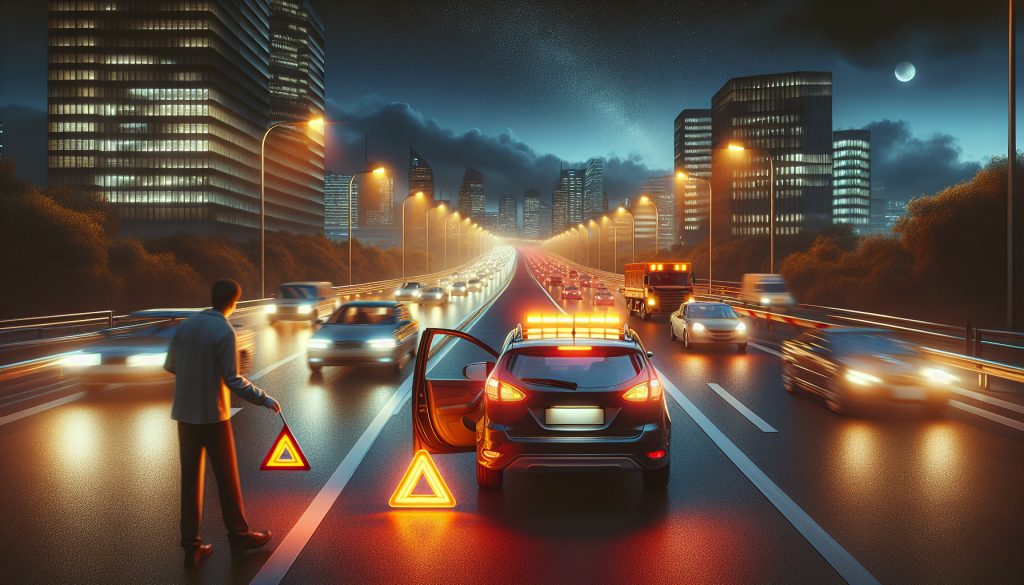
- In the event of a breakdown: If your vehicle breaks down and you cannot move it, you must place the V16 light on the roof of the car.
- Unauthorized stops: If you have to stop somewhere where stopping is not allowed, you must switch on the emergency warning light.
- In the event of an accident: If you witness or are involved in an accident, you must use the V16 light to warn other drivers.
It is crucial for all drivers to know about these situations, as the regulations aim to reduce risks on the road and improve road safety.
When will the V16 emergency warning light become mandatory?
From 1 January 2024, the V16 emergency warning light will be mandatory for all vehicles in Spain. This means that every driver must carry this device in their vehicle and use it in the situations mentioned above.
The DGT has introduced this regulation to ensure that vehicles can be identified safely in an emergency. The V16 light not only improves visibility but also protects the driver and passengers by eliminating the need to step onto the road.
It is important to note that, although external use is not currently required, it is expected to become mandatory by 2026. Therefore, all drivers are advised to start familiarizing themselves with how to use it now.
How to use the V16 emergency warning light correctly
Using the V16 emergency warning light correctly is essential for safety. Here’s how to use it properly:
- Place the light on the roof of the vehicle, making sure it is securely attached.
- Turn on the emergency lights as soon as you stop and before leaving the vehicle.
- Keep the light on until the vehicle has been removed or the situation has been resolved.
It is also essential to make sure the light is working properly before setting off. Test it regularly to check that the batteries are charged and that the device is working as expected.
What are the benefits of the V16 emergency beacon?
The V16 emergency beacon offers several advantages over traditional warning triangles, which are crucial for improving road safety:
- Greater visibility: The V16 beacon can be seen from up to 1 km away, giving other drivers an early warning.
- Easy to use: It is easier and quicker to set up than warning triangles, reducing the risk of accidents when getting out of the vehicle.
- Use in adverse conditions: The light is more effective in low-visibility conditions, such as fog or at night.
Using this beacon is a step forward in road safety, helping to protect drivers and their passengers.
What are the fines for not carrying an emergency beacon?
Failure to comply with regulations on the V16 emergency beacon can result in significant penalties. Fines may vary depending on the offence; the most relevant are:
The DGT (Spain's Traffic Authority) may impose fines ranging from 200 euros to 500 euros for not carrying an emergency beacon. Additional penalties may also apply if it is not used correctly.
It is important to remember that fines not only affect your wallet, but may also add points to your driving licence. Therefore, it is essential to comply with all current regulations.
Where can you buy a V16 emergency beacon?
Buying a V16 emergency beacon is straightforward. The device is available from various retailers, including:
- Auto repair shops.
- Car accessory shops.
- Large retailers and online stores.
When choosing a V16 beacon, make sure you select a model that complies with regulations and has good user reviews, such as the Help Flash model, which is highly recommended for its effectiveness and durability.
Frequently asked questions about emergency beacons
When is an emergency beacon mandatory?
An emergency beacon is mandatory in the event of a breakdown or an unauthorised stop when the vehicle cannot be moved. It must also be activated in the event of an accident.
When is it mandatory to use an emergency beacon in a practice driving test?
Using an emergency beacon during a driving test is subject to the same criteria as in real traffic situations. In other words, it must be used in the event of a breakdown or a stop in a prohibited location.
When must you use an emergency warning beacon?
The emergency warning beacon, another term for the V16 light, must be used in the same circumstances: breakdowns, unauthorised stops and hazardous situations on the road.
When should you use hazard lights?
A vehicle's hazard lights should be used whenever the car stops in a dangerous place or when other drivers need to be warned of a possible hazard.