Tree roots are vital to a tree’s growth and health, and some species have developed remarkably long roots. Understanding which tree has the longest roots is not only interesting but also crucial for garden and landscape planning.
Next, we’ll look at tree species with deep, aggressive roots and the impact they can have on their surroundings. We’ll also discuss how to prevent problems related to root growth and suggest trees that are less likely to cause structural issues.
Which tree species have the most aggressive roots?
Aggressive roots tend to spread considerably in search of water and nutrients, often causing problems in their surroundings. Tree species best known for having deep, aggressive roots include:
- Cypress: Its root system is extensive and can damage nearby structures.
- Maple: Often planted in gardens, its roots can cause problems if the tree is located near buildings.
- Horse chestnut: This tree can lift pavement and damage pipes because of its robust root system.
- Willow: Known for its ability to absorb large amounts of water, its roots tend to spread quickly.
- Walnut: Although it is a fruit tree, its root system can be invasive if it is not planted at an appropriate distance.
It is essential to consider where you plant these trees, especially near buildings. Keeping them at an appropriate distance can help prevent future problems.
Are cypress roots dangerous?
Cypress roots are known for being aggressive. They can cause significant damage to structures and paving. This is because they are constantly searching for water, causing them to spread much farther than you might expect.
Cypress roots can often lift asphalt, break pipes, and even affect house foundations. For this reason, cypresses should be planted a considerable distance from buildings. Regular maintenance is also advisable to manage their growth.
How Can You Stop a Tree’s Roots from Growing?
Controlling the growth of a tree’s roots can be a challenge, but there are several strategies you can use. Here are some recommendations:
- Installing barriers: Physical barriers made of materials such as plastic or metal can be placed in the soil to limit root spread.
- Root pruning: Pruning roots near the soil surface can help control their size, but this must be done carefully to avoid damaging the tree.
- Watering properly: Providing enough water can help prevent roots from seeking moisture in unwanted areas.
- Choosing the right species: Choosing trees with less aggressive roots from the outset can be a long-term solution.
It’s important to remember that every tree has its own needs and characteristics, so a tailored approach will be more effective.
Which Trees Don’t Have Invasive Roots?
If you’re looking for trees that won’t cause problems with invasive roots, several species are well suited to planting near buildings. Examples include:
- Apple tree: It generally has a less aggressive root system, making it suitable for family gardens.
- Sugar maple: Its roots don’t lift the soil, making it ideal for urban areas.
- Fir: Its roots are less invasive, making it a safe choice for gardens.
- Pine: It often adapts well to different soil types without causing root problems.
Choosing these species not only helps ensure the tree’s health but also protects nearby structures.
Which Fruit Trees Have the Least Aggressive Roots?
Fruit trees are an excellent addition to any garden, and many have more manageable root systems. Some fruit trees with less aggressive roots include:
- Apple tree: As well as producing delicious fruit, its roots are less invasive.
- Pear tree: Like the apple tree, it is garden-friendly and does not cause significant damage.
- Cherry tree: This tree has controlled growth compared with other fruit trees.
- Peach tree: Its roots do not spread aggressively, making it a good choice for small plots.
To grow these fruit trees, it is essential to provide proper care, including watering them correctly and pruning them when necessary. It is also advisable to find out how to care for fruit trees to maximize their growth and yield.
How Can Tree Roots Damage Structures?
Tree roots can cause various types of damage to nearby structures. This problem is more common with trees that have aggressive roots. They can damage structures in several ways, including:
- Lifting pavement: Roots can lift asphalt or concrete slabs, creating hazardous surfaces.
- Pipe damage: Roots can break water and sewer pipes, leading to costly repairs.
- Structural damage: An extensive root system can weaken the foundations of nearby buildings.
To prevent this damage, it is essential to plan carefully before planting trees, taking their potential growth and the characteristics of the site into account.
Related Questions About Trees and Their Roots
Which Tree Has the Largest Root?
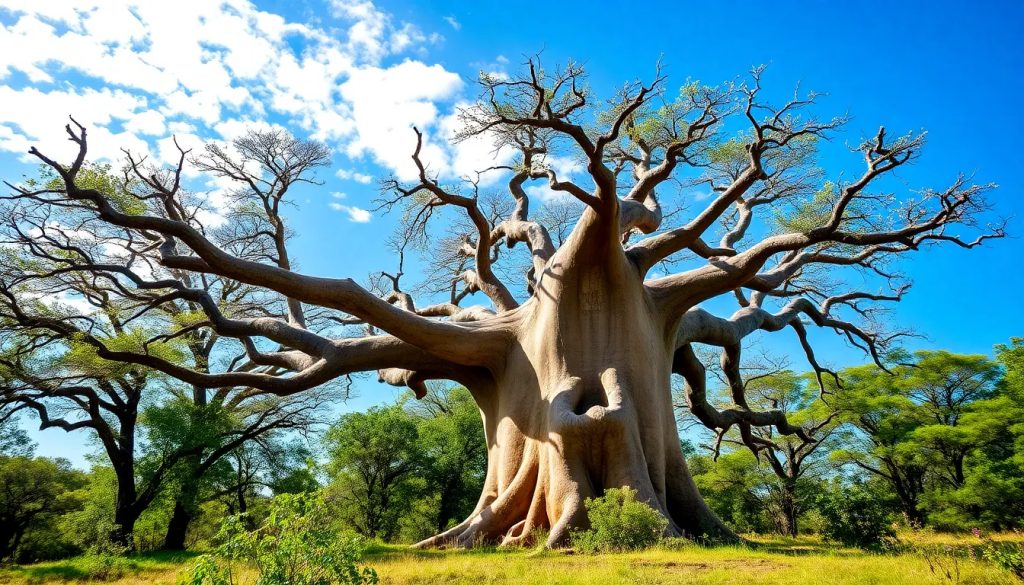
The tree with the largest root is the baobab. This iconic African tree has not only an impressive trunk, but also roots that can spread considerably in search of water in arid climates. Planting a baobab requires plenty of space, given its size and the extent of its roots.
Which trees have roots that don’t lift the ground?
Some trees, such as the fir and the pear tree, are known for having roots that don’t lift the ground. These trees are better suited to urban areas and gardens where damage to surrounding structures needs to be avoided.
Which tree has the deepest roots?
The Bristlecone pine is known for having some of the deepest roots among tree species. Its roots can reach considerable depths, allowing it to survive in harsh conditions, while the tree itself grows relatively slowly.
Which trees have the largest root systems?
Ficus trees are known for their extensive root systems, which can spread across large areas. These trees are popular in landscaping, but their aggressive roots require care when planting them near structures.
In this context, it is essential to understand which tree has the longest roots and how its roots can affect its surroundings. When choosing trees to grow, it is important to consider their potential impact on structures and other plants.