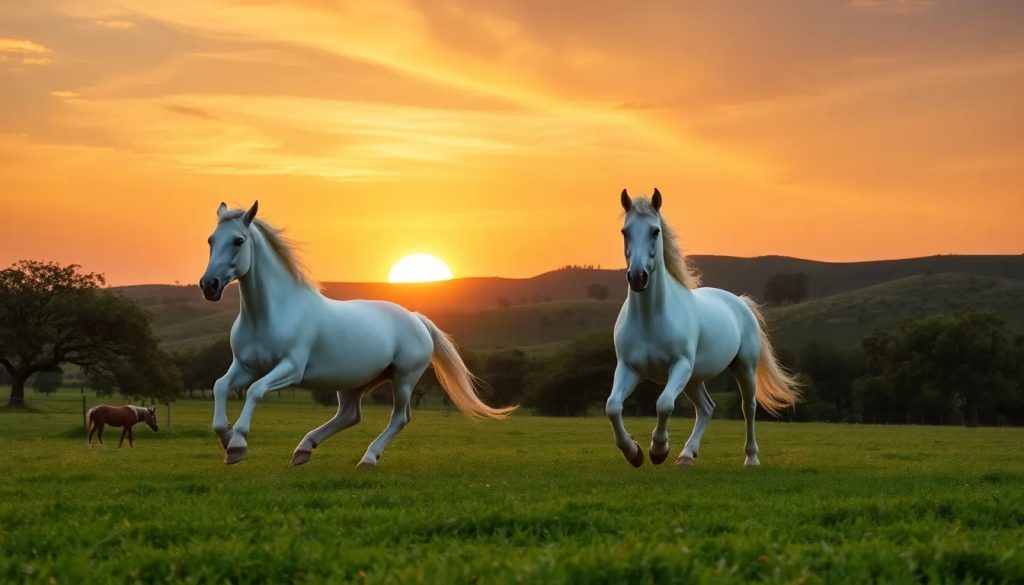
White horses are considered among the most beautiful and enigmatic animals in the equestrian world. Their color, which may seem simple, results from complex genetic interactions. Throughout history, white horses have been surrounded by symbolism and meaning, making them a fascinating subject of study.
In this article, we’ll explore the reasons behind their coloration, their special characteristics, and the care they require. We’ll also look at the cultural symbolism attributed to them and answer some frequently asked questions about these magnificent animals.
Why Are Some Horses White?
White horses result from a particular genetic combination. This coloration is due to the absence of melanin, a pigment that gives color to animals’ skin and coats. However, not all horses that appear white are truly white. Some gray horses may look white later in life, but their coats are actually gray and lighten over time.
The genetics behind white horses involve several genes, such as EDNRB and KIT. These genes play a crucial role in determining coat color. For example, the KIT gene is responsible for horses with completely white coats and pink skin, which are considered albino horses.
It is interesting to note that the genetic mutation that produces a white coat can have adverse effects on health. When two white horses are bred, some of their embryos may not be viable. This is because the dominant white gene is lethal in the homozygous state.
What Are Albino Horses, and What Are Their Characteristics?
Albino horses have a white coat and pink skin. However, it is important to note that the word “albino” specifically refers to a complete absence of melanin. True albino horses are therefore extremely rare.
Some characteristics of albino horses include:
- A completely white coat with no markings.
- Pink skin, which may be more susceptible to sunburn.
- Eyes that may be light blue or pink, indicating a lack of pigmentation.
These horses require special care because of their sensitivity to sunlight. It is essential to provide them with shade and adequate protection to prevent health problems.
What Are the Differences Between White and Gray Horses?
Gray horses are often mistaken for white horses. However, there are key differences that make them easy to tell apart. Here are some of the most notable:
- White horses have a completely white coat from birth, while gray horses are born with dark coats that lighten over time.
- White horses have pink skin, while gray horses can have skin in a range of shades.
- White horses are either true albinos or have specific genes that give them their color, whereas gray horses have melanin in their coats.
Understanding these differences is crucial because they affect the care each type of horse needs. For example, gray horses can become stained more easily and may have pigmented skin, unlike truly white horses.
What Breeds of White Horses Are There, and What Are Their Characteristics?
Several horse breeds can have white coats. Some of the best-known are:
- Friesian horse: Known for its elegant bearing and black coat, some individuals may display albino characteristics.
- Andalusian horse: This breed is famous for its beauty and agility, and some horses have a bright white coat.
- Arabian horse: Known for their endurance and temperament, some Arabian horses have a white coat.
- Percheron horse: Generally large in size, it can have a white coat, especially in its rarer varieties.
- Lipizzaner horse: Famous for its use in classical dressage, it can come in various shades, including white.
Each of these breeds has unique characteristics that make it stand out in the equestrian world. Their coloring is not only an advantage in competitions but is also rich in cultural symbolism.
How Should You Care for a White Horse?
Caring for a white horse requires special attention because of its delicate coat and skin. Here are some important care tips:
- Provide adequate shade to protect it from sun exposure.
- Keep its coat clean and stain-free by washing it regularly with special horse shampoo.
- Monitor its diet to ensure it gets all the nutrients it needs, and avoid foods that could stain its coat.
Regular veterinary checkups are also essential to detect any health problems early. Since white horses are more prone to skin conditions, prevention is key.
What Is the Spiritual Meaning of White Horses in Different Cultures?
The symbolism of white horses varies across cultures, but they are generally associated with purity, peace, and good luck. In many traditions, these horses are seen as messengers between the spiritual and human worlds.
In Western culture, white horses often symbolize nobility and grace. In religious contexts, they may represent the arrival of renewal or hope. In some Indigenous traditions, they are considered sacred animals with a strong spiritual connection.
In mythology and folklore, white horses have also been depicted as guardians and protectors, highlighting their importance in the relationship between humans and the divine.
What markings are common on white horses, and why do they occur?
Markings on white horses can be an interesting topic. Some of the most common include:
- Forehead markings known as stars.
- Markings on the legs, which may be spots or patches of color.
- Facial markings, which may include stripes or spots.
These markings occur due to genetic factors. The distribution of pigment in the skin can vary depending on each horse's color and specific genetics. In many cases, these markings are unique and make every white horse special.
Related Questions About White Horses
Why are some horses white?
Some horses are white because of certain genetic mutations that affect melanin production. This lack of pigment in the coat and skin results in a white color. It is important to remember that not all horses that appear white are truly white, since many gray horses become lighter as they age.
Why are some horses born white?
Some horses are born white because of the genetic traits they inherit from their parents. The genes responsible for their coloring are passed down from one generation to the next. In general, a horse born white has a pair of genes that produce this coloring, making it unique from birth.
Why do people call white horses gray?
The confusion between white and gray horses arises because gray horses often lose pigmentation over time, giving them a white appearance. However, it is essential to distinguish between them, since only truly white horses have pink skin and no melanin.
What do white horses symbolize?
White horses have deep meaning in many cultures. They generally symbolize purity, peace, and good luck. In some traditions, they are considered messengers between the spiritual and human worlds, representing the connection between the divine and the earthly.