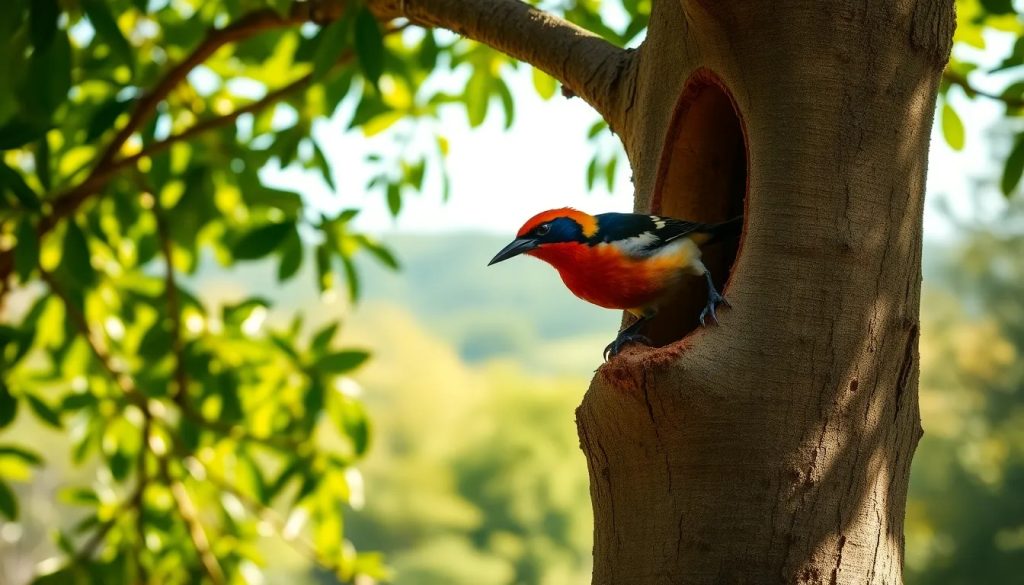
Woodpeckers are fascinating birds, known for their ability to drill into wood. This behavior raises the question of how they manage such an intense activity without injuring themselves. In this article, we’ll explore the physical adaptations and mechanisms that help them avoid injury, as well as their ecological importance and ways to deter them without causing harm.
Why do woodpeckers drill into wood?
Woodpeckers drill into wood mainly to find food, such as larvae and insects hiding beneath the bark. This activity also allows them to mark their territory and attract mates during the breeding season. Drilling is not only a way to find food, but also a social and reproductive behavior.
Woodpeckers also create cavities by drilling, which other animals can use, thereby contributing to the ecosystem. This interaction between species is vital for maintaining biodiversity in forests.
The distinctive sound they make when striking wood also serves a communicative purpose. Males often use this drumming to signal their presence and establish dominance in a given area.
How many species of woodpeckers are there?
There are more than 200 species of woodpeckers around the world, found across different continents. They belong to the order Piciformes, which also includes toucans and barbets. Each species has unique characteristics adapted to its particular habitat.
- Pileated woodpecker: Known for its large size and colorful plumage.
- Pigeon woodpecker: Noted for its small size and ability to find insects in wood.
- Red-headed woodpecker: Famous for its distinctive red head and characteristic call.
The variety of species also means differences in their foraging methods and social behavior. Some species are more solitary, while others may form groups to feed.
What adaptations help woodpeckers drill into wood?
Woodpeckers have a range of physical adaptations that allow them to drill without injuring themselves. One of the most notable is their long, sharp beak, specifically designed to penetrate wood. Their beak is constantly renewed, ensuring it is always in optimal condition for this activity.
They also have a muscular neck, which allows them to apply the force needed to drill without compromising their safety. Their skull is designed to absorb the impact of each strike, protecting their brain during this effort.
Another key adaptation is their tongue, which is extremely long and flexible. It can extend to catch larvae and other insects in narrow tunnels. The design of their tongue also helps them avoid contact with their beak, reducing the risk of injury.
Can you deter woodpeckers without harming them?
Scaring woodpeckers away without harming them is a common concern, especially for people with gardens or wooden structures. There are several effective ways to do this, including:
- Visual deterrents: Shiny or moving objects, such as reflective tape or balloons, can scare woodpeckers away.
- Deterrent sounds: Playing predator calls or unpleasant noises can help keep them away.
- Protective netting: Covering problem areas with netting can prevent woodpeckers from reaching them.
It is important to act quickly once you notice their presence to prevent structural damage to the wood. By using these strategies, we can coexist peacefully with these birds without harming them.
Interesting Facts About Woodpeckers: Remarkable Birds
Woodpeckers are truly fascinating creatures. Here are some facts you may not know:
- Some species can peck up to 20 times per second.
- A woodpecker's tongue can be up to twice as long as its beak.
- Their pecking is not only a way to find food but also a means of communication with one another.
These behaviors are fascinating from a biological perspective and also show how important woodpeckers are to the ecosystem. Their presence helps maintain the balance of forests and natural areas.
Related Questions About Woodpeckers
Why do woodpeckers peck wood?
Woodpeckers peck wood primarily to find food, such as insects and larvae beneath the bark. This behavior is essential to their survival, as it provides them with the nutrition they need. They also peck wood to mark their territory and attract potential mates during the breeding season, using their distinctive drumming sounds to communicate.
What is a fascinating fact about a woodpecker's tongue?
A woodpecker's tongue is a true wonder of nature. It is extremely long and designed to curl around its skull when not in use. This allows them to reach insects deep inside tunnels and feed with maximum efficiency. The tongue also has a sticky tip, making it easier to catch larvae hidden in the wood.
What is the woodpecker myth?
The myth about woodpeckers often stems from the idea that these birds can cause significant damage to wooden structures. While they do peck wood, their impact on ecosystems is far more positive. They help control pests and create cavities that benefit other species. So it is important to value their role in nature and not fall for the mistaken idea that they are merely destructive.
What is the purpose of a woodpecker's tongue?
A woodpecker's tongue serves several purposes. Its main function is to help the bird feed by allowing it to reach insects hidden in wood. In addition, its flexible, sticky tongue makes it easy to catch larvae. The tongue also plays a role in communication, as the way woodpeckers use it can indicate their emotional state and readiness to mate.
Woodpeckers are an essential part of our ecosystem, and understanding their habits and characteristics can help us appreciate them even more. By learning more about them, we can find ways to coexist harmoniously and respectfully, recognizing their importance to biodiversity.