Ice ages are climate phenomena that have left a profound mark on Earth's history. In this article, we'll explore why there is an ice age every 100.000 years and what causes them, as well as their impact on the environment.
Understanding these glacial cycles will help us learn more about today's climate and how it may change in the future. Join us as we uncover the secrets of our planet's climate history.
Why do ice ages occur every 100.000 years?
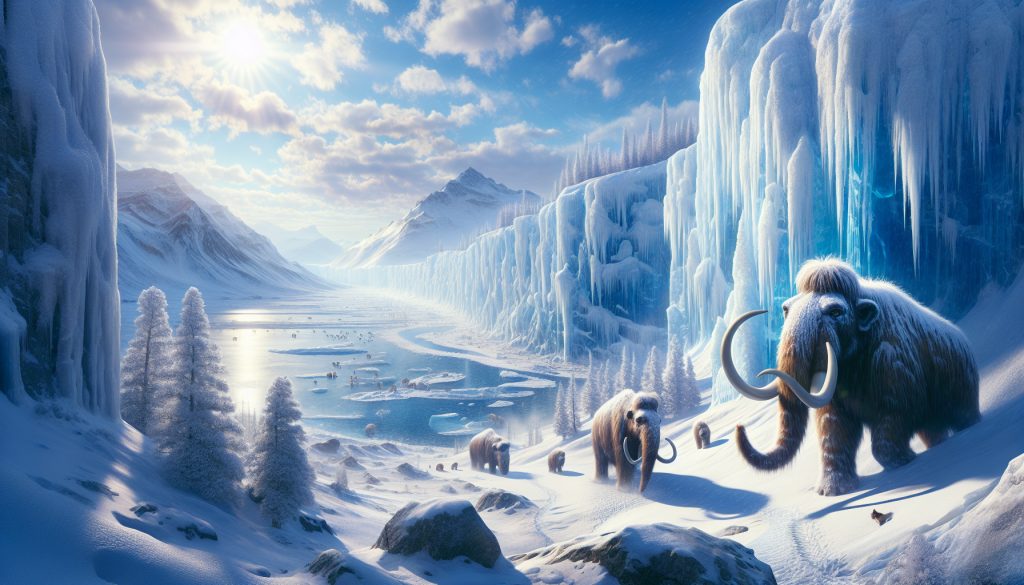
Ice ages, or glaciations, are periods when vast areas of Earth are covered by ice sheets. The main reason they occur every 100.000 years is linked to several climatic and geological factors. A recent study by Cardiff University has revealed that variations in carbon dioxide (CO2) levels and the oceans' ability to absorb this gas are key determinants of global temperature.
During the Middle Pleistocene, the glaciation cycle shifted from an interval of 40.000 years to one of 100.000 years. This change was driven by the interaction between Earth's orbit and CO2 levels in the atmosphere and oceans. Earth's axial tilt also plays a fundamental role in this process.
Fluctuations in the solar energy received by Earth, known as Milankovitch cycles, also contribute to these events. These cycles affect how light and heat are distributed across the planet, creating the conditions needed for glaciations to begin.
What causes an ice age?
The causes of an ice age are complex and involve multiple factors. The main ones include:
- Orbital variations: changes in Earth's orbit that alter the distribution of sunlight.
- CO2 levels: the concentration of carbon dioxide in the atmosphere directly affects global temperature.
- Volcanic activity: eruptions can release large amounts of aerosols that affect the climate.
- Ocean circulation: the oceans play a crucial role in regulating the global climate.
These factors interact and can reinforce one another, leading to global cooling that culminates in the formation of vast ice sheets. The interaction between these elements is an ongoing subject of study in climatology.
What Was the Little Ice Age?
The Little Ice Age was a period that lasted approximately from the 14th century to the mid-19th century. During this time, temperatures lower than usual were observed in several regions of the world, especially Europe and North America.
This phenomenon was marked by colder winters and shorter summers, which had a significant impact on agriculture and people's daily lives. Some scientists believe that this period was influenced by a combination of factors, including volcanic eruptions and changes in solar activity.
Evidence of the Little Ice Age can be seen in historical records, such as rivers and lakes freezing over when they normally do not. This period is also associated with poor harvests and famines, underscoring the importance of understanding ice ages in our history.
How Does Carbon Dioxide Affect Ice Ages?
Carbon dioxide (CO2) is a greenhouse gas that plays a crucial role in regulating the climate. During ice ages, CO2 levels are generally lower, contributing to global cooling.
When the oceans absorb CO2, the gas is stored, causing temperatures to fall. This leads to the formation of ice sheets. Conversely, when CO2 levels are high, as during interglacial periods, temperatures rise, reducing the extent of the ice sheets.
This dynamic cycle between CO2 and Earth's temperatures highlights the importance of balance in the climate system. Current carbon emissions, generated primarily by human activities, are disrupting this balance and could affect future glaciation patterns.
Could the Next Ice Age Arrive Soon?
The question of whether the next ice age could arrive soon is complex. In natural terms, glaciation cycles suggest that we are in an interglacial period, but human-caused climate change complicates this projection.
Current climate models indicate that CO2 emissions could be preventing the start of a new ice age. Human activity has drastically increased atmospheric CO2 levels, which could cause global warming and delay the start of future glaciations.
On the other hand, the interaction of natural factors, such as solar activity and orbital variations, could eventually contribute to the formation of an ice age, but no imminent change of this kind is expected.
What Role Do Changes in Earth's Tilt Play?
Earth's tilt is a crucial factor in determining the seasons and global climate. The tilt of Earth's axis varies over time, affecting how sunlight is distributed across the planet and, in turn, influencing glaciation cycles.
These changes occur in cycles lasting thousands of years and are part of what are known as Milankovitch cycles. These variations affect not only temperature but also precipitation, which is essential for ice formation.
Understanding these changes is vital for predicting how they may influence the future climate. Although Earth's tilt is a natural process, human activities are accelerating other climate changes that complicate the picture.
Related Questions About Ice Ages
Why Is There an Ice Age Every 100.000 Years?
The existence of an ice age every 100.000 years is due to a combination of factors, such as changes in Earth's orbit, fluctuations in CO2 levels, and ocean dynamics. These elements interact to create conditions that lead to prolonged periods of cold and the formation of ice sheets.
Why Do Ice Ages Occur?
Ice ages occur because of changes in solar radiation, concentrations of greenhouse gases such as CO2, and tectonic and volcanic activity. These factors combine in complex ways to affect the global climate.
Why Did the Ice Age End 10.000 Years Ago?
The ice age ended approximately 10.000 years ago because of rising CO2 levels and warmer global temperatures, which allowed the ice sheets to begin melting. This change was driven in part by solar activity and variations in Earth's orbit.
Why Did We Have an Ice Age?
Ice ages result from natural climate processes involving variations in Earth's orbit, changes in the configuration of the continents, and increases or decreases in greenhouse gas levels. These conditions create a natural cycle of cooling and warming.