In a world where social media takes centre stage, sometimes taking up much of our free time—and sometimes time we don’t even have to spare—there are always people trying to deceive others, spread hoaxes and take advantage of how little many users know about the platform.
Facebook is full of photos—often showing sick children, dying animals and similar cases—that urge people to comment, like or share because, according to the post’s author, this will raise money. Nothing could be further from the truth.
Facebook will never donate anything for sharing a post
Never share anything like this. Facebook won’t donate money because you like or share a post. All you’ll be doing is increasing a page’s number of fans, giving it free publicity and, worse still, spreading disturbing images that serve some other purpose.

Another type of hoax that often circulates on Facebook involves missing people, usually children or young people, to make the story more upsetting. In many cases, no specific date of disappearance is given; instead, the post says the person disappeared x days ago. This means the hoax never goes out of date: anyone who sees it assumes those x days were recent, shares it, and the hoax continues to spread across social media.
It should always include a fixed date with the day, month and year, a photo, genuine contact details and, if possible, an official reference or press release, a newspaper reference, or a copy of the police report about the disappearance.
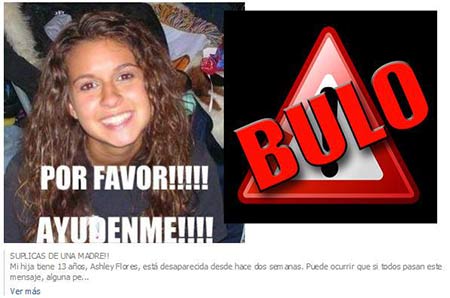
This girl is an example of one of the hoaxes that has circulated most widely on the internet, not only on Facebook but also on other social networks and by email. It has even been translated into many other languages around the world.
There are many other hoaxes we could discuss or list, so if you know of one that catches your attention, you can mention it in the comments.