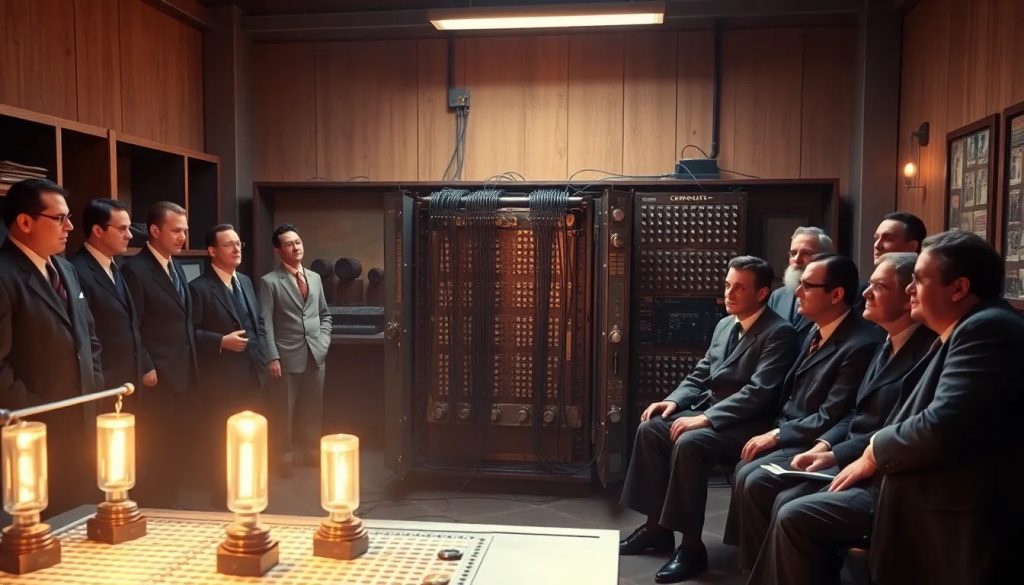
The evolution of technology has led to a series of groundbreaking milestones, and one of the most significant was the development of the first computer. This breakthrough not only transformed the way calculations were performed but also laid the foundations for modern computing.
In this article, we’ll explore the history of the first computer, its inventors and features, and the impact it had on the world. From the earliest days of computing to the most complex machines, every step has been crucial to technological progress.
When was the first computer invented?
The first computer was conceptualised and designed between 1936 and 1938 by German engineer Konrad Zuse. His creation, the Z1, is considered the first electromechanical machine capable of performing automatic calculations. This was a particularly difficult period because of the Great Depression, which meant Zuse had to work with limited resources.
The Z1 was not only a technical breakthrough; it also changed the way calculations were approached. Before it was invented, calculations were performed manually or with simple tools. The Z1’s ability to operate autonomously was a major step towards automation.
Over the years, the concept of the computer has evolved, but the Z1 is still recognised for its innovation. Its invention was a crucial starting point in the history of technology.
What was the first computer in history?
The Z1, created by Konrad Zuse, is considered the first computer in history. It was the first machine to use electromechanical components to perform calculations. Unlike its predecessors, the Z1 could be programmed, making it far more versatile.
However, the Z1 was not the only machine of its kind. Other machines, such as the Turing machine and Charles Babbage’s Difference Engine, also deserve a mention. Although they were not computers in the modern sense, they laid the groundwork for future developments.
Zuse’s Z1 was followed by the Z3, considered the first fully automatic, programmable computer. This marked a significant advance in computing and helped establish principles that are still used today.
Who invented the first computer?
The inventor of the first computer was Konrad Zuse. Born in Germany, Zuse designed and built the Z1 while working in difficult conditions. His innovative approach led him to create a machine that, though primitive by today’s standards, was revolutionary for its time.
In addition to Zuse, other pioneers such as Charles Babbage and Alan Turing made significant contributions to the development of computing. Babbage's work on his Analytical Engine influenced the design of future computers, while Turing developed fundamental computing concepts that remain relevant today.
Zuse continued his work and developed other computer models, such as the Z3, earning him a prominent place in the history of technology and modern computing.
What Was the First Computer Like?
The Z1, considered the first computer, was an electromechanical machine that used relays and punched tape to perform calculations. Despite its rudimentary design, its innovative construction made it possible to automate calculations.
Its notable features included:
- It used electromechanical parts rather than electronic components.
- It could operate according to a program.
- It could process binary numbers, making mathematical calculations easier.
- It had limitations in speed and accuracy compared with today's standards.
The Z1's design also reflected Zuse's creativity and vision. Although inefficient by modern standards, the machine he created paved the way for automated computing.
When Was the First Computer Created?
The Z1 was created between 1936 and 1938. During this time, Konrad Zuse faced numerous challenges, from a lack of resources to the social and political pressures of the era. Despite these obstacles, his perseverance and dedication led to one of the most important milestones in the history of technology.
After creating the Z1, Zuse did not stop there. He continued to develop his design, leading to the Z3, which would be the first programmable, fully automatic computer, launched in 1941.
The creation of the Z1 marked the beginning of computing as we know it today. Zuse did more than create a computer; he established the principles of programming and automation that would be fundamental to the future of technology.
Where Was the First Computer Created?
The Z1 was created in Berlin, Germany. Working in his small workshop, Konrad Zuse built this innovative machine in a setting where technology was beginning to flourish. Despite the difficulties around him, Zuse brought his vision of a machine capable of performing automatic calculations to life.
Berlin was facing difficult circumstances at the time, as it was in the midst of the Great Depression. Even so, Zuse used limited resources to develop his project, demonstrating his ingenuity and determination.
The Z1's location in Berlin is significant not only because it was created there, but also because of the impact it would have on the future development of computing across Europe and the world.
What Were the Z1's Features?
As the first computer, the Z1 had features that made it unique in its time. These included:
- Automatic calculations using electromechanical relays.
- It could perform basic arithmetic operations, including addition, subtraction, multiplication, and division.
- Data was entered using punched tape, which enabled programming.
- Its mechanical design, though limited, was pioneering in the automation of calculations.
Although the Z1 had limitations in speed and accuracy, its design was innovative for its time. Zuse managed to bring together concepts that would lay the foundations for the development of more advanced computers.
Today, the Z1 is considered a symbol of innovation in computing and a reminder of how the earliest steps in technology led to the complex systems we use today.
Related Questions About the First Computer in History
What Was the First Computer in the World?
The first computer in the world was the Z1, created by Konrad Zuse. It is recognized as the first electromechanical machine capable of performing automatic calculations, making it a milestone in the history of computing.
Who Invented the Computer in 1938?
The computer was invented by Konrad Zuse in 1938 with the creation of the Z1. This computer marked a key stage in the development of computing, establishing principles that would later be applied in other models.
When Was the First PC Released?
The first PC (personal computer) was released by IBM in 1981. However, it is important to note that the history of computers began much earlier, with inventions such as the Z1 laying the foundations for future developments.
What Were the 3 First Computers?
The first three computers were:
- Konrad Zuse's Z1.
- ENIAC, considered the first complete electronic computer, launched in 1945.
- Harvard Mark I, one of the first programmable computers, in 1944.
These computers were essential to the development of today's technology and marked the beginning of the modern computing era.