Reverse Bizum is an increasingly common scam involving second-hand sales, WhatsApp messages, fake refunds and supposed quick payments. It is one of those situations worth knowing about, just like other online dangers, because the scam can seem harmless at first.
Quick summary
If someone tells you they have sent you money through Bizum, but your app shows a button to accept a request for money, be careful: you could be the one sending money. Before tapping anything, check whether it says “send,” “request,” “pay” or “accept payment.”
What Is Reverse Bizum?
Reverse Bizum is a type of fraud in which the scammer takes advantage of Bizum's speed and the user's trust to get them to approve a transaction without reading it carefully.
With a regular Bizum transfer, someone sends you money. With reverse Bizum, the opposite happens: the scammer sends you a request for money and pressures you to accept it, making you think that is how you'll receive the payment.
It can also appear alongside other digital scams, such as fake account-closure messages or urgent alerts like the fake Hotmail account closure warning, which aim to make you act quickly without checking the information carefully.
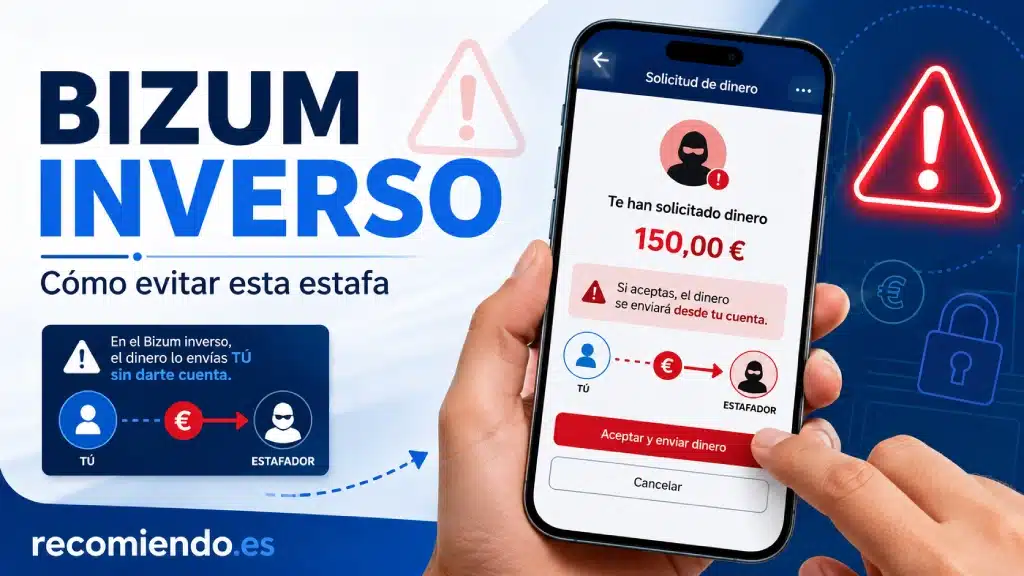
The key is to understand the difference: receiving a Bizum payment usually does not require you to agree to send money. If the app asks you to confirm a transaction, read it carefully before tapping the button.
How This Scam Works, Step by Step
- You list a product on a second-hand marketplace or receive a message from someone interested in it.
- The supposed buyer tells you they want to pay you via Bizum.
- Instead of sending you money, they send you a request asking you to pay them.
- They insist with phrases like “you just have to accept,” “it’s to confirm it,” or “it shows as sent on my end.”
- If you accept without reading, you authorize a payment from your account.
A simple example of reverse Bizum fraud
Imagine you’re selling a bicycle for 80 euros. Someone messages you and says they’ll pay you right away via Bizum. A little while later, you get a notification on your phone. Expecting to receive payment, you open it quickly and tap Accept.
The problem is that it wasn’t a payment into your account. It was a request for you to send 80 euros to the supposed buyer. If you confirm the transaction, the money leaves your account.
| Situation | Meaning | Risk |
|---|---|---|
| You receive a Bizum payment | Someone else has sent you money | Usually low |
| You receive a payment request | Someone else is asking you to pay them | High if you don’t know who they are |
| They pressure you to accept quickly | They try to stop you from reading the transaction details | Very high |
How to spot reverse Bizum fraud
Here are some warning signs that should make you stop before accepting anything:
- The buyer is in too much of a hurry.
- They ask you to accept a transaction “to receive the money.”
- The app refers to a request, payment request, transfer or payment.
- The person avoids meeting, calling or confirming basic details.
- They message you from an unusual number or with poorly written messages.
- They pressure you with phrases like “do it now, I have to go.”
Be careful
If you’re selling something, you should be receiving money—not accepting a request to pay. If you’re unsure, cancel the transaction and check it directly in your bank’s official app.
Where this scam often happens
Reverse Bizum scams often happen in situations where trust is built quickly, there’s little time to think and payments are immediate. For example:
- Second-hand marketplaces.
- Listings for used products.
- Ticket resales.
- WhatsApp messages from strangers.
- Claims that money sent by mistake is being refunded.
- Fake prizes, sweepstakes or gifts.
Something similar can happen when shopping online: before paying, accepting a request or trusting an unfamiliar platform, it’s worth checking whether the website and payment method are reliable. For example, Recomiendo.es also explains what Stripe is and how it works as a payment method.
What to do if you receive a suspicious request
If you receive a payment request and aren’t completely sure who sent it, the safest thing to do is not accept it.
- Don’t tap Accept. Read the screen carefully.
- Check whether it’s a payment into your account or a payment request. The difference is crucial.
- Open your bank’s official app. Don’t use links received by SMS or WhatsApp.
- Ask the person directly. If their story changes or they pressure you, be suspicious.
- Block and report them if you’re on a marketplace.
What to do if you’ve already fallen for the scam
If you accepted a reverse Bizum request and the money has left your account, act as quickly as possible:
- Take screenshots of the conversation, phone number, profile and transaction.
- Contact your bank immediately through its official app or customer service phone number.
- Report what happened to the platform where you contacted the other person.
- File a report with Spain’s State Security Forces and Corps.
- Don’t delete any messages or conversations until you’ve saved all the evidence.
Important
In a Bizum scam, it can be difficult to recover the money if the transaction was authorised by the user. Even so, you should notify your bank as soon as possible, keep any evidence and report the scam.
How to Avoid the Reverse Bizum Scam
The best way to protect yourself is to follow a simple routine before accepting any transaction:
- Always read the full transaction details.
- Don’t accept payment requests from strangers.
- Don’t rush into transactions.
- Be wary if the buyer is overly insistent.
- Check the transaction in your banking app before handing over an item.
- Don’t follow instructions over the phone or WhatsApp while making the transaction.
The Difference Between Receiving Money and Accepting a Request
The main difference is simple: if someone sends you money, the transaction should appear as a credit. If the screen instead asks you to accept a request or confirm a payment, it may be asking you to send money from your account.
This confusion is exactly what many online scams exploit. That’s why you should follow the same rule as with any unusual alert, suspicious email or urgent message: stop, read and check before clicking.
Frequently Asked Questions About the Reverse Bizum Scam
▸ Is a reverse Bizum transaction a regular Bizum payment?
No. With a regular Bizum payment, someone sends you money. In a reverse Bizum scam, you receive a request to pay, even though the scammer may try to make you think you’re receiving money.
▸ Can I get my money back if I accepted the request?
It depends on the case. If you authorised the transaction, it may be difficult. Even so, contact your bank as soon as possible, keep any evidence and report the scam.
▸ How can I tell if I’m receiving or sending money?
Read the confirmation screen. If it includes words such as “request,” “payment request,” “pay,” “send” or “accept request,” you’re probably not receiving money but authorising a payment.
▸ Is Bizum safe to use?
Bizum can be safe if you use it carefully and through your bank’s official app. The problem isn’t the service itself, but the scam that tricks users into confirming a transaction without reading it properly.
▸ Where can I find official information?
You can find information about Bizum scams at INCIBE and on the Banco de España’s Cliente Bancario portal.
Conclusion
The reverse Bizum scam works because it looks like a simple, quick transaction. Scammers take advantage of the fact that many people accept notifications without reading all the details. So the most important rule is simple: if you’re expecting to receive money, don’t accept a payment request without checking it.
If in doubt, cancel the transaction, open your bank’s official app and check whether the money has actually arrived. Taking a few seconds to check can prevent you from losing money.
Recommended Official Sources